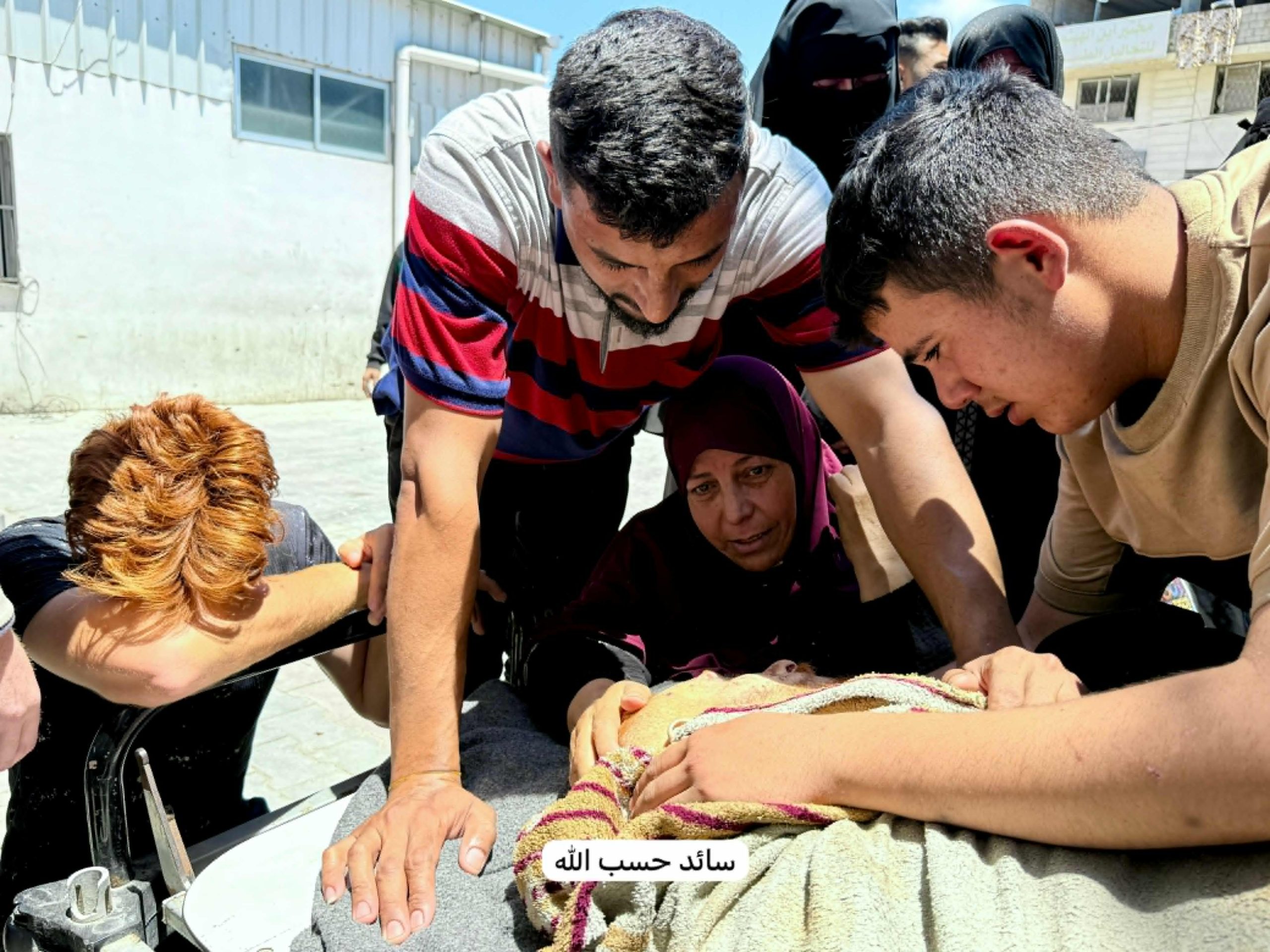
DaysofPal- As Eid al-Adha approaches, there are no signs of celebration in Gaza’s sprawling displacement camps, where hundreds of thousands of Palestinians are grappling with grief and poverty, as a result of the Israeli genocidal war that still continues against them.
For 20-year-old Bilal al-Bassous, the holiday brings only painful memories. Living alone in a makeshift tent in central Gaza, he recalls the voices and laughter of his wife and two young daughters, all of whom were killed in an Israeli airstrike in March 2024.
“I hear their voices, but I cannot find them,” he said, describing the weight of loss that has replaced any sense of festivity.
Al-Bassous recounted how he and his family were trapped for three days inside a house belonging to his wife’s relatives, where they had sought refuge after being displaced. On March 21, 2024, the building came under heavy bombardment.
“I was with my wife and our two daughters. The army struck the fourth floor, then the first, bringing down the entire building,” he said.
“My wife was holding them, carrying a bag, hoping we could escape. But in a moment, everything was buried under the rubble.” He added.
Al-Bassous survived with injuries, but his wife, 26, and daughters, Lamar, 3, and Wateen, 1, were killed. He was only able to recover and bury their bodies 10 days later, after Israeli forces withdrew from the area.
Since then, he has been repeatedly displaced, moving from one location to another with extended family members and living in a tent that offers little protection against extreme weather.
“People around the world prepare for Eid, buying clothes for their children or visiting relatives,” he said.
“I lost my sister, two brothers, my wife, and my daughters. I go to the cemetery and sit there alone.” He noted.
In another nearby tent, 63-year-old Khalil Shannan shelters with around 50 members of his extended family, including children and grandchildren.
Their conditions are dire, with many suffering from injuries and chronic illnesses.
“We have been displaced 14 times since the war began,” Shannan said.
“Our home was destroyed, and we were left in the streets. We moved from Gaza to Rafah, then Khan Younis, Deir al-Balah, Nuseirat, and back to Gaza.” He added.
He said 64 members of his family have been killed during the war, including twin grandchildren. One of his sons was injured and required surgery, while Shannan himself suffers from diabetes and high blood pressure, worsened by injuries sustained during the conflict. His wife also struggles to walk due to her own injuries.
The family relies on community kitchens for food and cannot afford meat, vegetables, or basic necessities. One of his grandchildren suffers from brain atrophy, but access to treatment is unavailable.
“There is no taste for Eid, no celebrations,” Shannan said.
“These conditions do not break our will, but this holiday comes filled with sorrow and poverty.” He continued.
Despite a ceasefire agreement that took effect on October 10, 2025, the humanitarian impact of the war continues to weigh heavily on Gaza’s population.
Hundreds have been killed and thousands injured since the ceasefire, while widespread destruction has devastated homes and infrastructure.
According to official figures, more than 72,000 Palestinians have been killed and over 172,000 injured since the war began in October 2023. Around 90% of Gaza’s civilian infrastructure has been damaged or destroyed.
Aid deliveries remain far below agreed levels, with only a fraction of the 600 daily trucks entering the territory, exacerbating food shortages and deepening the humanitarian crisis.
As a result, displaced families across Gaza are marking Eid al-Adha not with celebration, but with endurance, finding in survival itself a form of resilience amid ongoing hardship.
Shortlink for this post: https://daysofpalestine.ps/?p=74920