DayofPal—As the airstrikes subside over Gaza, a quieter devastation unfolds. Beneath the ceasefire’s silence lies a toxic legacy, polluted soil, poisoned waters, and suffocating air.
Experts and officials now warn that what Gaza faces is not just a humanitarian crisis, but an environmental genocide, with consequences that could span generations.
Ecological Collapse Across Gaza
The UN Environment Programme (UNEP) has issued a dire warning that Israel’s genocide has caused “unprecedented” environmental damage in Gaza. Contaminated groundwater, decimated farmland, and coastal pollution now render much of the territory uninhabitable.
“This will leave a legacy of environmental destruction that could affect the health and well-being of generations,” said Inger Andersen, UNEP’s Executive Director.
Nizar Al-Wahidi, an agriculture expert from Gaza’s Ministry of Agriculture, said Israel’s army bulldozed nearly all agricultural lands in the enclave, from Beit Hanoun to Rafah. Once the backbone of Gaza’s food supply, these lands now lie barren.
“We are not just talking about rebuilding infrastructure,” said Al-Wahidi. “We’re talking about reviving ecosystems that have been deliberately exterminated.”
Losses of Water, Soil, and Sea
According to the Gaza Government Media Office, over 94% of Gaza’s 178,000 dunums of farmland have been destroyed. At least 1,223 agricultural wells, 665 poultry and livestock farms, and 700,000 meters of water and sewage networks were obliterated.
More than 200,000 tons of explosive residues and toxic metals now contaminate Gaza’s soil and groundwater. Officials estimate a cost of $15 billion just to begin ecological recovery.
“This is not collateral damage; this is environmental warfare,” said Dr. Ismail Al-Thawabta, spokesperson for the Gaza Government Media Office. “It is systematic, deliberate, and violates every international standard.”
Food System on the Brink
Gaza’s food production has collapsed. From an annual yield of 405,000 tons of vegetables, production has dropped by 93% to just 28,000 tons. Cultivated land has shrunk from 93,000 to 4,000 dunums. Meanwhile, Gaza’s fishing industry has been entirely wiped out.
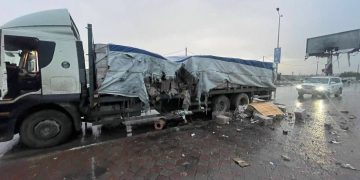
More than 120,000 humanitarian aid and fuel trucks were prevented from entering the strip during extended border closures, worsening famine conditions. As a result, over 650,000 children suffer from hunger, and 40,000 infants face death from lack of milk, according to the media office.
A Land Made Unlivable
With more than 80% of Gaza’s land were under Israeli army’s control or rendered unsafe, only 6% of arable land remains usable, and even that is under constant threat.
Gaza’s leaders warn that without urgent international intervention, the territory may become permanently uninhabitable.
While casualty figures make global headlines, Gaza’s ecological collapse is the quieter catastrophe, one that ensures suffering long after the bombs have fallen silent.
“This isn’t just the loss of land,” said Al-Wahidi. “It’s the loss of the ability to live. The war didn’t just kill people; it killed the future.”
Legal Push for Accountability
The Gaza Government, in coordination with international legal experts and human rights groups, is compiling legal evidence to submit to international courts. Officials aim to classify the destruction as a war crime and crime against humanity, citing:
Article 8 of the Rome Statute (ICC) prohibiting long-term environmental destruction.
The Fourth Geneva Convention, which forbids destruction not justified by military necessity.
The ENMOD Convention, which bans environmental modification for hostile purposes.
“This is a form of ecological cleansing,” said Al-Thawabta. “A genocide not just against people, but against the land itself.”
Shortlink for this post: https://daysofpalestine.ps/?p=68345