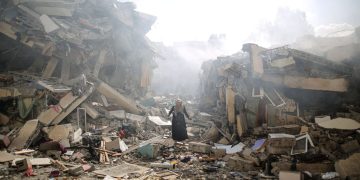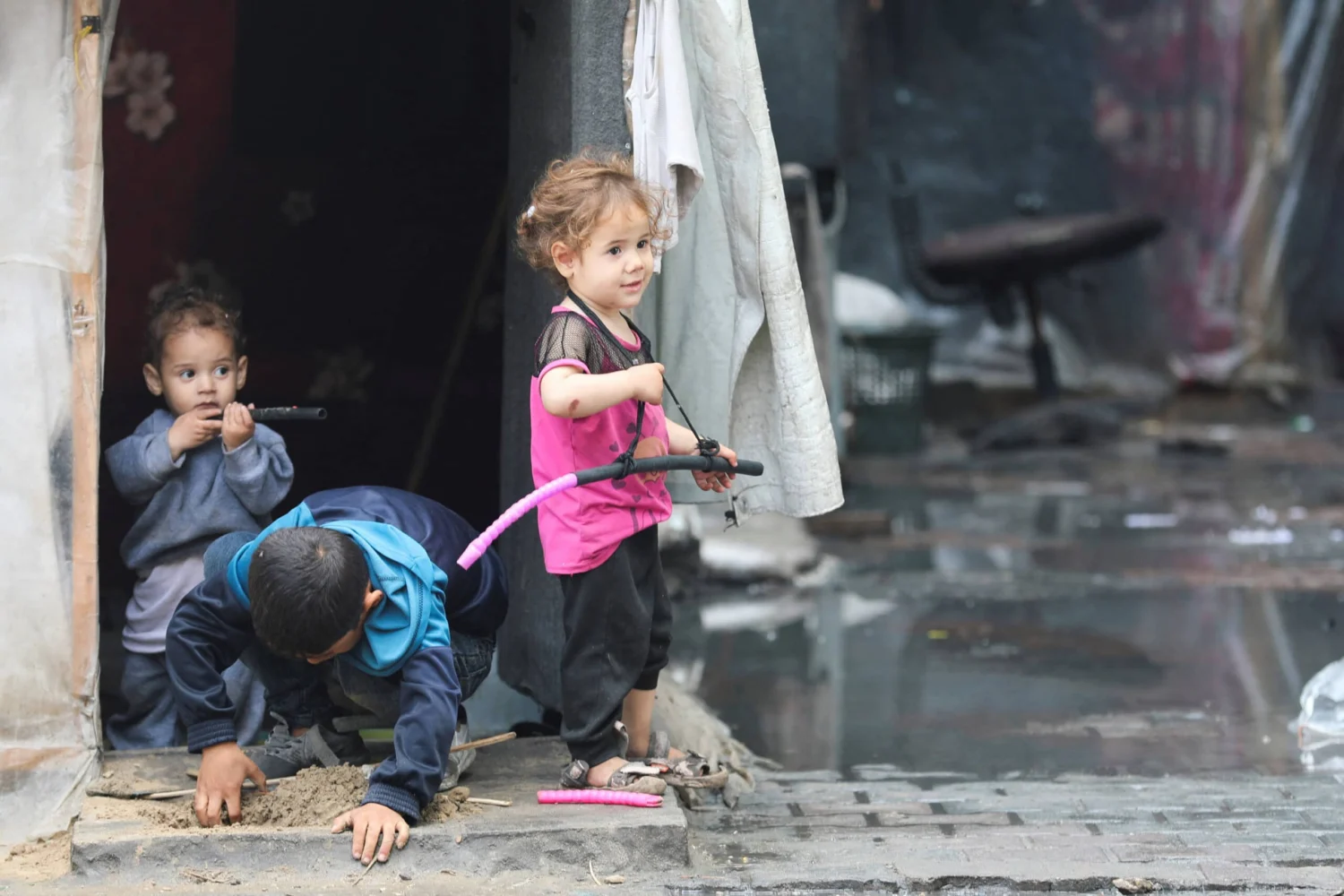
DayofPal – Between rows of displacement tents and the rubble of destroyed neighborhoods, Gaza’s children continue searching for moments of childhood.
Despite nearly three years of war that has erased playgrounds, parks, and safe public spaces and wiith toys now priced beyond the reach of most families, many children have turned scraps of cloth, bottle caps, and discarded materials into makeshift games.
The war has devastated the recreational infrastructure that once offered children a refuge from daily hardships.
According to the Palestinian Olympic Committee, 265 sports facilities across Gaza have been damaged since the war began, including 184 that were completely destroyed, while many public parks and open spaces have been converted into shelters for displaced families.
For many parents, finding a safe place for their children to play has become nearly impossible.
“We have nowhere to take our children,” said displaced mother Aida Radwan from Gaza City’s Al-Shati’ camp.
“The parks are gone, the sea is dangerous, and every place could become a target,” she added. .
Twelve-year-old Nizar Al-Kurd, displaced with his family in northern Gaza, summed up his generation’s reality: “We kept looking for somewhere to play, but every place became dangerous.”
The economic shortfall for families who endured the genocide has further deepened children crisis: toys that once cost only a few shekels have become unaffordable for families struggling to secure food, water, and other essentials.
Aida Radwan says that a small ball, which before the war was sold for one or two shekels (around $0.27 to $0.54), now costs about 15 shekels (approximately $4).
Meanwhile, the prices of plastic dolls have risen from three or four shekels (around $0.81 to $1.08) to about 60 shekels (nearly $16.20).”
Children thereby have started to create their own alternatives.
“The children now play with bottle caps instead of marbles,” said displaced resident Mahmoud Shehadeh. “They cut and shape them into games because that’s all they have.”
Another displaced mother, Hind Radi, makes handmade dolls from yarn and worn-out clothing for her daughters.
“When my mother throws away something old or broken, I take it and try to make something that brings the children joy,” she said. “The important thing is that they don’t feel deprived.”
Mental health specialists and humanitarian agencies warn that the consequences extend far beyond the loss of toys. Children across Gaza continue to experience severe psychological distress, including anxiety, depression, chronic fear, and social withdrawal after months of war and displacement.
Aid organizations stress that play is not merely entertainment but a vital component of children’s emotional recovery, helping them process trauma, rebuild social connections, and regain a sense of normalcy.
Despite the destruction surrounding them, Gaza’s children continue to improvise football matches in the narrow alleys between tents, using handmade balls stitched from scraps of cloth.
“They destroyed everything,” Mahmoud Shehadeh said. “There isn’t a playground or a park left. But the children still want to play.”
Shortlink for this post: https://daysofpalestine.ps/?p=76714