DaysofPal – With 70 percent of the health ministry’s fleet now out of service, health officials warn that severe response delays are turning minor injuries into preventable deaths.
The collapse of the healthcare sector in Gaza is no longer limited to a shortage of medicine or hospitals being forced offline. It has systematically dismantled the ambulance and emergency system, the critical first line of defense for saving the wounded and sick.
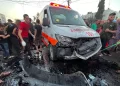
As the Israeli war and blockade continue, ambulance vehicles are rapidly going out of service. Driven by direct military targeting and an absolute inability to secure basic maintenance supplies, one of the most vital pillars of the local health system is on the verge of complete paralysis. This comes at a time when medical teams are facing unprecedented pressure, managing thousands of emergency calls every single week.
Most Health Ministry Ambulances Out of Service
Mahmoud Hammad, Director General of Administrative Affairs at Gaza’s Ministry of Health, said around 70 percent of the ministry’s ambulance fleet is no longer operational due to the prolonged blockade, direct attacks, and the continued ban on importing tires, batteries, engine oil, and spare parts.
Speaking to SAFA, Hammad said the crisis threatens to deprive thousands of wounded and sick people of timely access to hospitals while severely limiting the ability of medical teams to carry out their work.
He explained that the Ministry of Health owns 82 ambulances, of which 39 are completely out of service, while another 17 require urgent repairs. He warned that unless maintenance supplies are allowed into Gaza, the ambulance system could face total collapse.
Dr. Iyad Zaqout, Director of the Ministry of Health’s Ambulance and Emergency Unit, said the emergency response system is approaching complete paralysis.
He explained that an ambulance can become entirely unusable simply because it needs a single replacement tire, as essential spare parts have been completely exhausted.
According to Zaqout, Israeli authorities continue to prevent the entry of replacement parts needed to repair vehicles that have deteriorated after months of continuous operation during the war. He also said new ambulances have not been allowed into Gaza to replace those that have been destroyed or worn out.
Only 30 percent of the ambulance fleet remains operational, he said, while 35 additional ambulances have stopped working because the parts needed to repair them are unavailable. The most critical shortages include tires, batteries, lubricants, and other essential maintenance supplies.
Delayed Emergency Response Puts Lives at Risk
Zaqout said the shortage of functioning ambulances has already had a direct impact on emergency medical services.
Response times to emergency calls have increased significantly as the number of available vehicles continues to decline. Despite operating with less than one-third of its capacity, the ambulance and emergency unit still carries out around 1,500 emergency missions every week.
He added that ambulances frequently suffer mechanical failures while transporting patients because of worn-out tires and damaged roads, placing wounded patients at even greater risk.
The transportation crisis extends beyond ambulances. Hammad said the ministry’s technical teams oversee approximately 5,000 transport operations every week, or nearly 20,000 each month, including the movement of patients, medical staff, medicines, and medical supplies.
Around 140 truck journeys are also carried out weekly to distribute medicines and medical consumables across healthcare facilities.
However, 100 service vehicles have already gone out of service, including 30 that are beyond repair, while another 80 require urgent maintenance. Health officials warn that this threatens the distribution of medicines and medical equipment between hospitals.
The crisis has also affected private transportation companies contracted by the ministry, many of which have been operating for months without routine maintenance because engine oil, tires, and spare parts are no longer available.
Ministry Calls for Urgent International Intervention
The Ministry of Health said the remaining operational vehicles require at least 250 liters of engine oil every month to continue functioning, but the continued ban on maintenance supplies is making it increasingly difficult to keep them on the road.
The ministry appealed to the international community, the United Nations, and humanitarian organizations to urgently intervene to facilitate the entry of spare parts, tires, batteries, lubricants, and 60 new diesel-powered ambulances.
Health officials warned that unless these supplies are allowed into Gaza, the ambulance and emergency response system could collapse entirely, placing the lives of thousands of patients and wounded people at even greater risk.
Shortlink for this post: https://daysofpalestine.ps/?p=76391