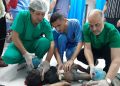
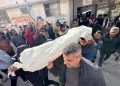
DaysofPal- Dr. Adnan Al-Borsh carried nothing but his stethoscope and white gloves as he moved through the corridors of Gaza’s devastated hospitals, searching for lives he could still save, an injured child needing urgent surgery, or a patient clinging to hope amid the sounds of war.
A leading orthopedic surgeon in Gaza, Al-Borsh was a familiar figure at Al-Shifa Medical Complex, known among patients for his calm demeanor and reassuring voice. But his dedication did not protect him.
After months in Israeli detention, he died in Israeli custody as a result of torture and abuse.
In Gaza, Al-Borsh became more than a doctor; he symbolized humanity under extreme conditions.
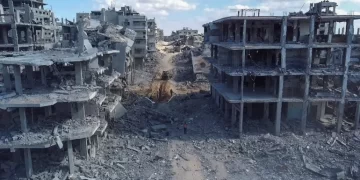
From the beginning of the Israeli genocide in October 2023, he refused to leave the hospitals despite bombardment, siege, and the collapse of the healthcare system.
He continued working across multiple facilities, including Al-Shifa, the Indonesian Hospital, Al-Awda Hospital, and Kamal Adwan Hospital, treating the wounded under increasingly dire conditions.
He was arrested in December 2023 by Israeli forces while working at Al-Awda Hospital in northern Gaza.
According to testimonies, he refused to leave the operating room while treating patients.
Months later, Palestinian prisoner affairs authorities and advocacy groups announced that he had died on April 19, 2024, in Ofer Prison.
Dr. Adnan Ahmed Atiya Al-Borsh was born in 1974 in Jabalia refugee camp in northern Gaza. Raised in a modest family shaped by displacement and hardship, he was known from a young age for his academic excellence and quiet personality, as well as his strong desire to help others.
He completed his early education in Jabalia before traveling abroad to study medicine in Romania, graduating from Iași University.
He later earned board certifications in orthopedic surgery from Jordanian and Arab medical institutions, followed by a British fellowship in complex fracture surgery in London.
He also obtained a master’s degree in political science from Al-Azhar University.
Returning to Gaza, he became a consultant and head of the orthopedic department at Al-Shifa Medical Complex.
Over the years, he performed hundreds of surgeries and trained younger doctors, often describing medicine in Gaza as more than a profession: it was, in his words, “a mission to save lives under siege.”
When the Israeli genocide began, Al-Borsh remained on the front lines of the collapsing healthcare system.
As hospitals came under pressure, he moved between facilities, continuing to operate despite severe shortages of medicine, anesthesia, and electricity.
His eldest son, Yazan, described his father as a man driven by duty rather than heroism.
“From the beginning of the war, he left every morning knowing he might not return,” he said. “We asked him to stay, especially as the bombing intensified, but he would always say: ‘ How can I leave the wounded behind? Who will treat the children?”
In the days before his arrest, Yazan said his father barely slept, working long hours in operating rooms under extreme conditions.
After his arrest, the family lost all contact with him. “We heard conflicting reports about where he was being held, sometimes in the Negev, sometimes in Ofer, sometimes in Ashkelon,” Yazan said.
“We were never allowed to communicate with him or know his condition. My mother would wake up every night crying.”
“How can a doctor who spent his life saving people be killed?” Yazan said.
“He never carried a weapon, only a medical bag,” he added.
He described his father as a caring and gentle presence at home despite his demanding work.
“He always tried to sit with us, ask about our studies, and make us laugh, even when he was exhausted. My younger siblings still wait for him to return.” He continued.
“I am proud that he stayed with his people until the end,” Yazan added.
“But it is a painful pride. What happened to him is not just a personal loss; it is a story the world must hear.” He said.
News of Dr. Al-Borsh’s death sparked widespread outrage in Gaza and beyond, particularly among medical and human rights communities.
Many described his killing as further evidence of the systematic targeting of Palestinian medical personnel during the war.
Doctors in Gaza called his loss irreplaceable, given his expertise in orthopedic surgery.
Human rights organizations and medical associations have called for an independent international investigation into the circumstances of his detention and death.
Images of Al-Borsh in his white coat have circulated widely on social media, becoming a symbol of a doctor who remained beside his patients until the end.
For many in Gaza, his death reflects a broader tragedy, a physician who dedicated his life to saving others, only to die in captivity.
Shortlink for this post: https://daysofpalestine.ps/?p=75887