
DaysofPal- The United Nations Under-Secretary-General for Humanitarian Affairs, Tom Fletcher, has warned that the humanitarian situation in the Gaza Strip continues to deteriorate, urging the international community to increase financial support and exert pressure to allow greater volumes of humanitarian aid into the territory.
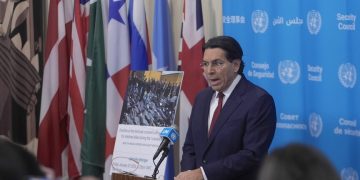
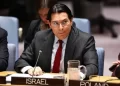
Fletcher made the remarks during a United Nations Security Council session held on Thursday at the request of the ten non-permanent members of the Council. The meeting focused on the humanitarian situation in Gaza and the implementation of Security Council Resolution 2803, which relates to the ceasefire and the proposed plan to end the war.
During his briefing, Fletcher noted that the proportion of households experiencing hunger in Gaza had fallen from 92 percent to 36 percent. However, he stressed that residents of the enclave remain deprived of the most basic necessities of life.
He added that civilians in Gaza continue to be killed and injured on a daily basis due to airstrikes, shelling, and gunfire, despite a reduction in the intensity of direct hostilities since the ceasefire took effect.
Since the start of the truce, Fletcher said that almost 1,000 Palestinians have been killed, including over 250 children. He described the continued loss of children’s lives as a reflection of the tragic reality facing civilians across the Gaza Strip.
The UN official also emphasized that Gaza remains one of the most dangerous places in the world for humanitarian workers. He noted that nearly 600 aid personnel have been killed in recent years, accounting for more than half of all humanitarian workers killed globally during the same period.
Fletcher further highlighted that large numbers of Palestinians are now confined to increasingly shrinking areas, where they face severe living conditions and ongoing restrictions on movement. He said that approximately 70 percent of Gaza’s population requires adequate shelter, while essential services are approaching collapse.
Citing assessments by the World Health Organization, Fletcher stated that no hospital in Gaza is currently operating at full capacity. He also warned of a worsening water crisis, noting that more than 1.1 million children struggle daily to access safe drinking water, according to estimates from the United Nations Children’s Fund (UNICEF).
In addition, he pointed to the continued deterioration of sanitation conditions and growing public health risks, including an increase in injuries linked to rat bites. Fletcher urged Security Council members to treat these alarming indicators with the seriousness they deserve.
He also drew attention to severe shortages of electricity generators, engine oil, and spare parts, factors that have further intensified civilian suffering and forced residents to rely on costly and limited alternatives, such as transporting water over long distances and conducting medical evacuations under highly challenging conditions.
Concluding his briefing, Fletcher stressed the urgent need for concrete measures to improve humanitarian conditions in Gaza and to ensure the unhindered delivery of aid and essential services to the civilian population.
Shortlink for this post: https://daysofpalestine.ps/?p=75539