DayofPal—The International Committee of the Red Cross (ICRC) has warned that thousands of Palestinians believed to be buried beneath Gaza’s rubble face an increasing risk of never being identified.
ICRC revealed that recovery efforts remain slow and critical forensic evidence continues to deteriorate, hindering the process of identification.
According to the ICRC, between 10,000 and 14,000 people are thought to remain trapped under the vast quantities of debris left by the war.
Since the ceasefire took effect, Palestinians have begun clearing some of an estimated 61 million tonnes of rubble, but the process has been hindered by a severe shortage of equipment.
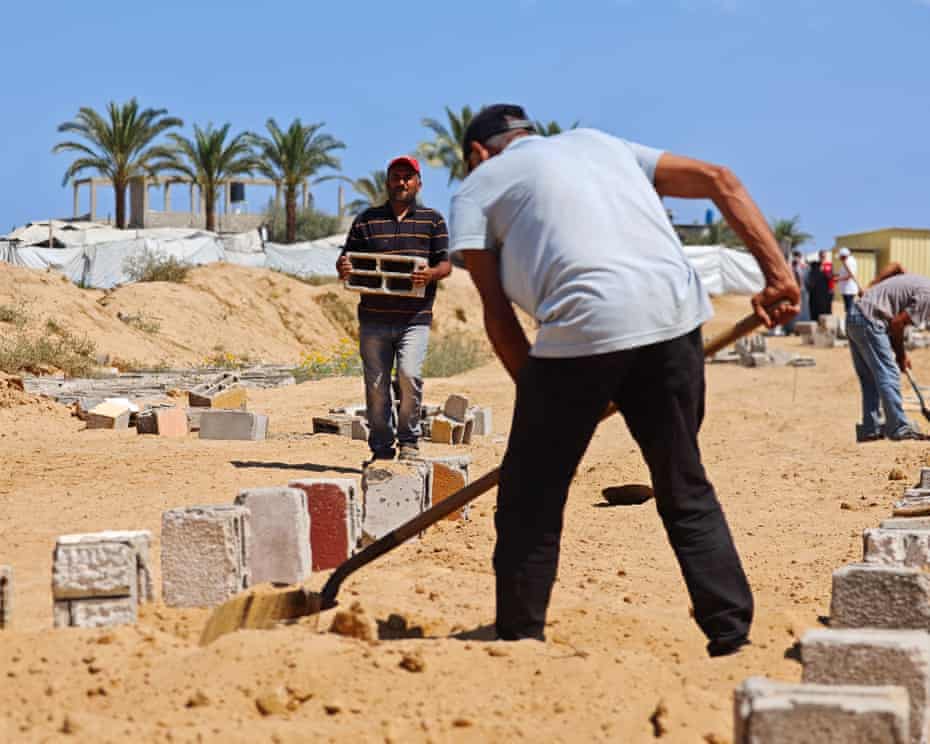
Recovery teams are largely relying on hand tools such as shovels, pickaxes and wheelbarrows, with requests to allow the entry of heavy machinery reportedly going unanswered from the Israeli side.
Humanitarian officials say excavators and other specialized equipment are essential to accelerate the search for human remains.
Pat Griffiths, the ICRC spokesperson in Jerusalem, warned that delays in recovering bodies could make identification increasingly difficult.
As decomposition advances, remains may become skeletonized, while vital evidence such as personal belongings, fingerprints and other identifying features can be lost.
Forensic experts have also echoed those concerns, noting that the passage of time significantly reduces the likelihood of successful identification.
DNA evidence can also degrade, making future efforts to match remains with family members more challenging.
Ahmed Dahir, Gaza’s director of forensic medicine, said authorities have encountered cases in which bodies had deteriorated to skeletal remains within weeks.
He attributed the rapid decomposition to environmental conditions and animal activity.
The challenges have prompted authorities in the Gaza Strip to establish a cemetery in Deir Al-Balah for unidentified victims recovered from the rubble.
More than 650 bodies have been buried there in numbered graves, with officials documenting each burial in the hope that the remains can eventually be identified and returned to their families.
The situation is compounded by the lack of DNA testing capabilities in Gaza’s hospitals. Officials say the territory lacks the necessary equipment and materials to conduct large-scale genetic identification efforts.
Beyond the forensic challenges, families of missing Palestinians continue to endure profound uncertainty. Psychologists describe the phenomenon as “ambiguous loss”, a form of unresolved grief experienced when the fate of a loved one remains unknown.
The absence of death certificates has also created legal and financial difficulties for some families, including obstacles in accessing assistance programs.
The ICRC stressed that identifying the dead is not only a matter of dignity for those who lost their lives but also a fundamental right for families seeking answers about the fate of their loved ones.
Shortlink for this post: https://daysofpalestine.ps/?p=75395