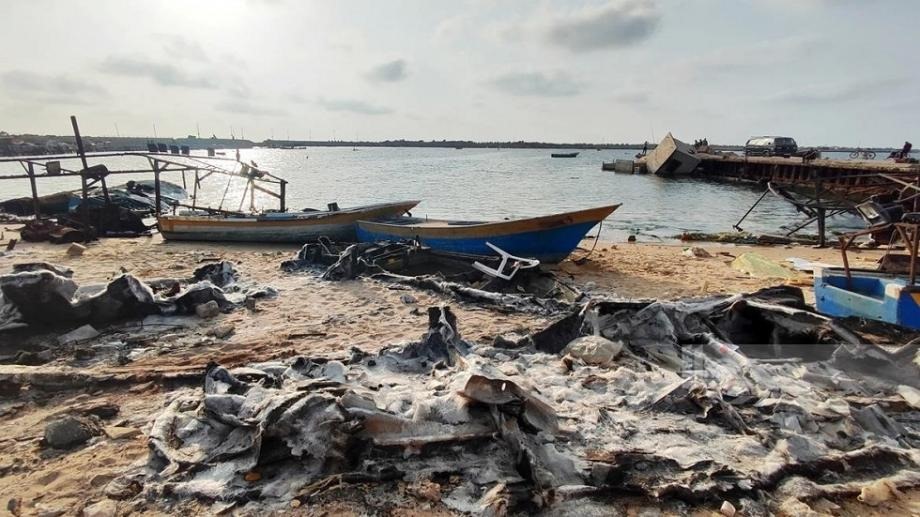
DaysofPal- For thousands of displaced families in the Gaza Strip, displacement no longer means only losing their homes and searching for shelter. It has become a daily struggle against worsening environmental and health hazards, as sewage water and mounting piles of waste surround tents and temporary shelters across the territory.
In many areas of Gaza City, displaced families live in camps lacking even the most basic services. Tents are often situated near pools of wastewater, heaps of garbage, and piles of rubble, raising growing concerns about the spread of disease, particularly among children and the elderly.
Khaled Al-Salmi, a displaced resident who has been forced to flee multiple times since the war began, said his family believed they had found a safer place after leaving their home. Instead, they found themselves confronting a different kind of danger.
The tent where his family now lives stands near stagnant wastewater, creating ideal conditions for insects and mosquitoes to thrive. Foul odors linger around the camp day and night, making daily life increasingly difficult.
Several of his children have developed recurring health problems, including allergies and skin infections. Al-Salmi fears their condition will continue to deteriorate if living conditions remain unchanged.
Children Bear the Heaviest Burden
In a neighboring tent, displaced mother Umm Mohammed Al-Haddad said children are among the most vulnerable victims of the environmental crisis unfolding in displacement camps.
With limited space and no safe places to play, children often remain close to sources of contamination, including sewage pools and garbage that has accumulated for months.
Families attempt to clean the areas around their tents using whatever means are available, she explained, but the scale of the problem exceeds their capabilities, especially as wastewater continues to flow and garbage collection remains irregular.
Many mothers, she added, report symptoms among their children ranging from persistent coughing and skin rashes to respiratory illnesses.
The suffering reflects a broader crisis affecting the entire Gaza Strip. According to data from the Palestinian Central Bureau of Statistics and the Environmental Quality Authority, more than 90 percent of Gaza’s water and sewage infrastructure has sustained severe damage during the war.
Large sections of the territory’s approximately 1,545-kilometer sewage network have been damaged, while 47 pumping stations have been destroyed or rendered inoperable. As a result, authorities have struggled to manage wastewater and prevent it from overflowing into residential areas.
The ongoing electricity shortages and lack of fuel have further worsened the crisis. Many pumping and treatment facilities can no longer operate effectively, causing sewage to spill into streets and areas where displaced families are sheltering.
Mounting Waste Crisis
Environmental challenges extend beyond sewage contamination. Municipalities are also grappling with an escalating waste-management crisis due to extensive damage to equipment and vehicles used for garbage collection.
Local estimates indicate that around 710,000 tons of household waste have accumulated across Gaza. Municipal authorities are often unable to collect or process the waste regularly because of shortages of machinery, spare parts, and fuel.
Displaced resident Samer Abu Zeid said garbage has become a constant feature of daily life in the camps. Some residents have resorted to burning portions of the waste in an attempt to reduce the buildup, despite the additional health risks posed by toxic smoke.
Rubble Adds to Environmental Threats
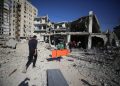
Beyond household waste, Gaza faces another environmental challenge: the enormous quantities of rubble generated by the destruction of homes and infrastructure.
Available estimates indicate that more than 60 million tons of debris are scattered across the territory following the destruction of more than 330,000 homes and buildings. The rubble has contributed to increased pollution levels and the spread of dust and hazardous materials throughout densely populated areas.
Environmental specialists warn that the continued presence of such vast amounts of debris poses a long-term threat to both public health and the environment, particularly in areas crowded with displaced civilians.
Impact on Agriculture and Food Security
The war’s consequences have also extended to Gaza’s agricultural sector. According to United Nations assessments, approximately 86 percent of agricultural land across the Gaza Strip has been damaged or destroyed, a figure that rises to nearly 94 percent in northern Gaza.
Experts warn that the loss of productive farmland threatens food security for millions of residents and increases dependence on humanitarian assistance as the conflict continues.
Environmental assessments also suggest that military operations and widespread destruction have generated millions of tons of carbon emissions, adding further strain to Gaza’s already fragile environment.
Warnings of Disease Outbreaks
Public health specialists caution that the continued spread of wastewater and the accumulation of garbage near densely populated shelters could trigger outbreaks of infectious diseases and epidemics, particularly given the severe overcrowding in displacement camps.
Displaced residents and local organizations are calling for urgent intervention to provide municipalities with equipment and fuel, improve sanitation and waste-management services, and ensure access to clean water and safe hygiene facilities.
Surrounded by sewage and waste, thousands of displaced Gazans face a humanitarian reality in which survival is no longer defined solely by escaping the dangers of war. For many, it now also means confronting an escalating environmental and public health crisis that grows more severe with each passing day.
Shortlink for this post: https://daysofpalestine.ps/?p=75388