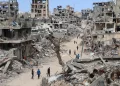
DaysofPal- A ceasefire is supposed to mark the beginning of recovery, but eight months after the guns fell silent in Gaza, the psychological ledger tells a radically different story. For over two million people, the absence of full-scale war has not meant the presence of safety.
Persistent Israeli assault and a choking humanitarian blockade have kept the entire population on a war footing, triggering an unprecedented mental health emergency. As panic and trauma compound daily, Gaza is learning a bitter truth: stopping the bombs was only the first step in a much longer, quieter war for survival.
Across Gaza, residents describe their lives as suspended between war and peace. Continued violations and recurring security incidents have left many in a constant state of psychological alertness, preventing any meaningful return to stability.
Living in Fear Despite the Ceasefire
Alaa Abdel Rahman, a father of five from the Nuseirat refugee camp, says life has not returned to normal despite months having passed since the ceasefire took effect.
“The intense and continuous bombardment has stopped, and that is true,” he said. “But we still live with the same fear. Every time we hear an aircraft overhead or an explosion nearby, it feels as if the war has returned. I cannot sleep normally, and I wake up several times each night to make sure my children are safe.”
According to data from the Palestinian Ministry of Health, 936 people have been killed since the ceasefire began on October 10, while 2,860 others have been injured. The ministry also reported 781 recovery operations involving bodies retrieved from various locations.
For 35-year-old Umm Mehran, a mother of three who was displaced multiple times during the war, daily life remains a form of psychological warfare.
“I fear food shortages and the return of famine. I fear the return of airstrikes, and I worry constantly about my children’s future,” she said. “I try to appear strong in front of them, but the fear never leaves.”
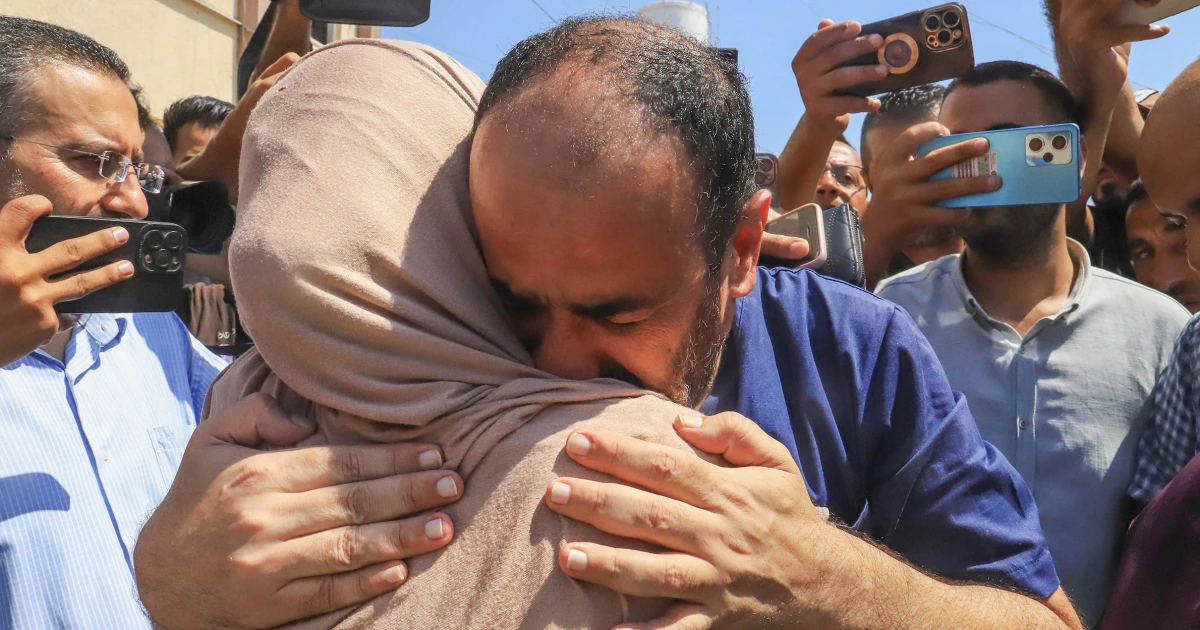
She added that she sometimes finds herself crying for no apparent reason and feels as though years have passed in a very short period of time.
Twenty-two-year-old Hamada Rabie believes psychological distress has become a defining feature of his generation’s experience. He says he lives with constant tension and irritability and spends much of his time thinking about a future that remains impossible to envision.
“When friends gather, we talk only about the war, losses, and worries,” he said. “It has become difficult to find anyone who has not been psychologically affected by what happened.”
Growing Demand for Mental Health Support
As residents continue to struggle with the consequences of war and ongoing insecurity, mental health clinics and counseling centers across Gaza are witnessing a growing demand for support services.
Mental health professionals describe this trend as a natural result of years of accumulated trauma and pressure. Psychological disorders have become increasingly visible, while the social stigma once associated with seeking mental health care has begun to diminish.
Field reports indicate a widespread increase in symptoms such as nightmares, bedwetting among children, concentration difficulties, and extreme fear of sudden noises. At the same time, the need for psychological support services for children has exceeded the capacity of existing healthcare institutions.
The United Nations Office for the Coordination of Humanitarian Affairs (OCHA) reported in its humanitarian update issued on May 15, 2026, that demand for specialized case management, mental health and psychosocial support services, and protection interventions continues to surpass available resources.
Similarly, the World Health Organization described the psychological impact of the war on Gaza as profound in its 2026 emergency health appeal for the occupied Palestinian territory. The organization estimated that around one million people in Gaza require mental health and psychosocial support services.
In its February 2026 report, The Gaza We Want, UNICEF stated that nearly one million children had been exposed to severe wartime experiences and traumatic events. The report noted that children repeatedly identified psychological support services as one of their most urgent needs, alongside physical healthcare.
According to the United Nations, daily life in Gaza continues to be defined by displacement, trauma, uncertainty, and deprivation, factors that directly contribute to rising levels of anxiety, depression, and post-traumatic stress disorder.
Uncertainty Clouds Recovery
Experts argue that ongoing political and security uncertainty remains one of the biggest obstacles to psychological recovery. Residents do not know whether the ceasefire will endure, when reconstruction efforts will begin in earnest, or when essential services will be fully restored.
The United Nations and human rights organizations have repeatedly warned that continued restrictions on aid and recurring violence threaten to deepen both the humanitarian and psychological crises, making recovery increasingly difficult for a society exhausted by war, displacement, and immense human loss.
In Gaza, the success of a ceasefire is measured not only by the number of days that pass without a full-scale war but also by people’s ability to regain a sense of safety.
For many residents, that sense of security remains elusive. Caught between fears of renewed escalation, the hardships of daily life, and the burden of unresolved trauma, Gaza’s population continues to face a fragile psychological reality that will require long-term support and serious recovery efforts to prevent the scars of war from becoming a lasting burden for future generations.
Shortlink for this post: https://daysofpalestine.ps/?p=75095