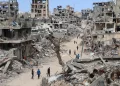
DaysofPal- In the Gaza Strip, the war is no longer defined by political headlines or competing military statements. It has become a crushing daily reality that follows residents through every aspect of their lives.
Continuous bombardment, repeated displacement, and the widespread collapse of humanitarian conditions have turned suffering into a shared experience affecting nearly everyone without exception.
As the number of casualties continues to rise day after day, the war has also produced scenes that have reshaped many narratives surrounding the nature of the confrontation and its impact on Palestinian society.
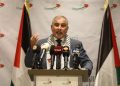
Over recent months, casualty lists have included the names of sons and relatives of Palestinian political and military leaders. Some were killed in airstrikes targeting homes or displacement tents, while others died in combat zones or at various field locations inside Gaza.
The repeated appearance of names linked to prominent Palestinian leaders has reopened debate over the long-standing Israeli narrative portraying faction leaders as detached from the suffering of ordinary residents or removed from direct danger.
Throughout the war, Israel has relied heavily on media campaigns promoting the image of “hotel leaders” or leadership figures supposedly distant from the battlefield. The aim, according to observers, has been to create a psychological and political divide within Palestinian society and to convince public opinion that civilians alone bear the cost of the conflict.
However, developments on the ground, including the killing of relatives and children of several Palestinian leaders inside Gaza, have presented a different narrative, one that many Palestinians say appears more consistent with the realities unfolding in the territory.
In Gaza today, death no longer distinguishes between ordinary families and families connected to political leadership. Airstrikes have reached residential neighborhoods, shelters, and displacement camps across the Strip.
As the death toll has climbed into the tens of thousands, the names of politically known families have repeatedly appeared in obituary notices and casualty lists, reflecting both the scale of the destruction and the widening circle of human loss.
Observers say this reality has strengthened a sense of “shared fate” within Gaza, where scenes of funerals, mourning, and loss have become strikingly similar across Palestinian society regardless of political affiliation or organizational position.
The genocide, which has entered increasingly brutal stages, has left little room for separation between leadership and the broader population. Daily suffering now touches nearly everyone, from losing children and relatives to displacement, insecurity, and repeated attacks.
Field reports also suggest that Israeli assassination and targeting policies have expanded beyond specific individuals to include their surrounding family circles, reflecting a broader campaign that extends beyond conventional military objectives.
From Gaza’s old neighborhoods to displacement camps in the south of the Strip, the same scenes of grief continue to repeat themselves. The names of sons and relatives of Palestinian leaders killed during the war have become part of the wider humanitarian tragedy unfolding across Gaza.
At the same time, analysts believe that the continued circulation of images and reports documenting the deaths of leaders’ relatives inside Gaza has weakened part of Israel’s propaganda narrative, particularly as evidence emerged showing these families living within the same war environment endured by the wider population.
The reality in Gaza today appears far more complex than simplified media portrayals. Politics and human loss have become deeply intertwined, while social and political distinctions fade before the scale of destruction and civilian suffering.
The narratives of Palestinian families, including those of political figures, continue to bear witness to the harsh reality imposed by months of continuous aggression. It is a reality in which loss has become a common language shared across Gaza, in a war that has left hardly any home untouched by fear, grief, or waiting.
Shortlink for this post: https://daysofpalestine.ps/?p=74523