
DaysofPal — A worsening water crisis in the Gaza Strip is placing more than two million residents at risk, as severe shortages and widespread contamination leave most of the population without reliable access to safe drinking water.
The crisis is aggravated due to the Israeli suffocating siege and restrictions on the Gaza Strip.
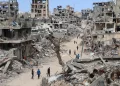
With summer approaching, the situation is rapidly deteriorating. Years of conflict, most recently the devastating war, have caused extensive damage to water infrastructure, including pipelines, pumping stations, and desalination facilities, drastically reducing the territory’s ability to supply clean water.
According to estimates by UNICEF, more than 90% of Gaza’s water is unfit for drinking due to high salinity levels, contamination from sewage leakage, and the long-term depletion of the coastal aquifer.
Reports from the United Nations Development Program and the World Bank indicate that Gaza’s water and sanitation infrastructure has suffered widespread destruction, directly affecting both the availability and quality of water.
Access to water has fallen far below global minimum standards. Before the war, the average daily water consumption per person was estimated at 80-85 liters, sufficient to meet all household needs. Today, that figure has dropped dramatically to between 3 and 5 liters per day in many areas.
In some parts of northern Gaza, residents receive as little as 5.7 liters daily. At the same time, in cases of severe displacement, consumption has fallen to just 1.5 to 2 liters per person per day, levels considered critically insufficient for survival.
UNICEF data also indicates that 96% of groundwater in Gaza is no longer safe for human consumption, forcing most residents to rely on unsafe or only partially treated water sources.
The Palestinian Water Authority has warned that the crisis is no longer just about supply shortages but represents a near-total collapse of the system, posing a direct threat to public health and food security.
As temperatures rise, water demand naturally increases, but supplies remain extremely limited.
“In summer, we need twice as much water, but we can barely get enough to drink,” said a 37-year-old mother, who identified herself as Umm Louay. “We are forced to buy water at high prices.”
Another resident, a 50-year-old man identified as Abu Mohammad, said water delivered to displacement camps is unreliable but remains the only option in the absence of alternatives.
Many families rely on water trucks or private desalination stations. Still, these solutions are costly and often fail to guarantee safe water quality, further burdening households already struggling with economic hardship.
Children are among the most affected by the crisis, as a lack of clean water impacts growth and increases vulnerability to disease.
The World Health Organization has warned that water contamination, combined with rising temperatures, is contributing to the spread of waterborne illnesses, particularly acute diarrhea and dehydration among children.
Doctors in Gaza report a noticeable rise in gastrointestinal infections during the summer months, driven by reliance on unsafe or inadequately treated water.
As the effects of war and rising heat intensify, Gaza’s water crisis is evolving into an immediate threat to survival. With damaged infrastructure and scarce resources, access to clean water has shifted from a basic service to a daily struggle for millions.
Shortlink for this post: https://daysofpalestine.ps/?p=74244