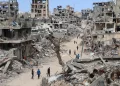
DaysofPal- Across the decimated landscape of the Gaza Strip, time is no longer measured by the ticking of a clock but by the raw endurance required to survive another day. Daily life has become a test of resilience for everyone, yet the reality for women is especially complex. Responsibilities at home now intersect with fear, poverty, and deep instability.
According to recent data from UN Women, women and girls are paying the highest price in the aftermath of the war in Gaza, which United Nations reports describe as one of the worst humanitarian crises in recent history.
From Homemakers to Primary Providers
With sources of income disappearing, many women have been forced into roles they never expected. Thousands have shifted from managing households to becoming the main breadwinners for their families.
A 42-year-old mother, Umm Alaa, described her transformation. She now bakes bread inside a displacement tent and sells it to support her children after her husband lost his job when the factory where he worked was destroyed. Before the war, she lived in a home in the northern Nuseirat refugee camp, focused on raising her children and maintaining the house she built with her husband. Today, survival demands constant work.
This shift extends far beyond one family. United Nations reports indicate that the war has destroyed livelihoods for hundreds of thousands of women, forcing them into the workforce to secure food and basic needs for their families.
Survival Over Ambition
Samar, 29, once graduated with top honors and hoped to pursue an academic career. Now she works in sewing to help cover mounting expenses.
“Work today in Gaza is no longer about achieving dreams; it is only about survival,” she said. “I had ambitions and plans, but I now find myself in a place I never imagined. Circumstances pushed me into it.”
She noted that many women share the same experience. Economic collapse and widespread unemployment have made it impossible for men alone to provide for households, pushing women into shared or leading financial roles.
The Highest Price
These personal stories reflect broader trends. Data from the Palestinian Central Bureau of Statistics shows that women are bearing the heaviest burden. The number of widows has risen to 22,057, and the percentage of female-headed households increased from 12 percent before the war to nearly 18 percent by late 2025.
UN Women estimates that one in every seven families in Gaza is now led by a woman. This translates to more than 16,000 women who have lost their husbands and now carry the weight of critical decisions under extremely difficult conditions.
The struggle goes beyond earning income. Daily life is filled with exhausting routines, including long lines where women and children wait for hours under the sun to collect drinkable water. These scenes have become a defining feature of displacement camps across Gaza.
With social support networks collapsing, women are forced to adapt and improvise in an unstable and limited labor market. Many are trying to sustain their families under harsh living conditions that offer little certainty.
Shortlink for this post: https://daysofpalestine.ps/?p=73983