DaysofPal- The United Nations Office for the Coordination of Humanitarian Affairs (OCHA) stated on Tuesday that the needs of the population in the Gaza Strip continue to exceed far what relief organizations can provide. Strict restrictions and persistent obstacles continue to hinder essential humanitarian operations.
According to the statement, UNICEF and its partners successfully restored access to clean water in the southern portion of the territory. This recovery follows an Israeli airstrike on March 25 that severely damaged a primary desalination plant, forcing its production capacity down to less than 20%.
Before these repairs, approximately half a million people in Deir al-Balah and the Al-Mawasi area of Khan Younis suffered from a lack of adequate drinking water. While the United Nations attempted to fill this gap by transporting water via trucks, the output remained insufficient to meet the local demand.
OCHA emphasized the urgent necessity for facilitating the work of humanitarian groups. The office called for the entry of larger quantities of essential goods through available crossings to address the worsening humanitarian crisis.
The current situation is tied to a near-total collapse of basic services, specifically regarding water, public hygiene, and sanitation. Maintaining minimum personal or environmental hygiene standards is impossible due to the scarcity of water and the lack of cleaning and sterilization supplies. These conditions significantly increase the risk of disease outbreaks and epidemics within overcrowded areas housing displaced persons, the wounded, and the sick.
Residents face unprecedented conditions where health, environmental, and humanitarian crises converge into a singular catastrophe. An ineffective response to this disaster has left the entire region vulnerable and struggling to survive.
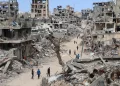
Several factors are driving this dire situation, transforming vast areas into uninhabitable environments. The heavy accumulation of solid waste in residential areas and around shelter centers creates significant health hazards, while the overflow of wastewater and the massive buildup of rubble and debris further degrade the living conditions. Together, these elements transform once-populated spaces into breeding grounds for disease and pests, making daily life nearly impossible for the local population.
Shortlink for this post: https://daysofpalestine.ps/?p=73655