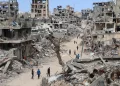
DaysofPal – Plans related to the administration of the Gaza Strip have slowed significantly following the outbreak of the Israeli-U.S. military campaign against Iran, according to a source involved in efforts to organize post-war governance and relief programs in the territory.
A member of the National Committee for the Administration of Gaza said preparations for the committee to assume operational responsibilities in Gaza, along with several emergency relief initiatives, have stalled since the escalation in the region.
“The war has disrupted everything,” the source told Al-Quds Al-Arabi, explaining that the suspension of humanitarian projects has deepened the already difficult living conditions in the enclave.
Relief Projects Put on Hold
The committee had previously prepared a plan to take responsibility for supervising civil affairs in Gaza. Under current circumstances, the source said, those plans cannot move forward, and discussions about urgent relief projects have largely disappeared.
Before the escalation with Iran, committee members received assurances following the first meeting of the Peace Council that new humanitarian projects would soon begin in Gaza. Several participating countries pledged financial contributions intended to support sectors including energy supply and housing for displaced families.
The initiatives included the introduction of mobile housing units, commonly known as caravans, to improve shelter conditions for residents living in tents after years of destruction.
The Peace Council held its inaugural meeting on February 19 in Washington, D.C., under the leadership of Donald Trump. During the meeting, Trump described the situation in Gaza as complex and announced a pledge of $10 billion in assistance. Other participating states contributed more than $7 billion toward a broader rescue package.
Forty-seven countries took part in the gathering, alongside the European Union in an observer role. Discussions focused on reconstruction and long-term stability following more than two years of Israeli military operations in Gaza.
Plans for Housing Repairs
The source said that the committee had also started drafting workable plans to fix severely damaged structures in Gaza. The goal involved restoring partially destroyed homes so displaced families currently living in tents could return to habitable structures.
These efforts were intended to provide a partial solution to the widespread displacement affecting much of the population.
The tightening Israeli blockade on Gaza has complicated relief work further. Israeli authorities reinforced restrictions on the territory after the start of the war involving Iran, limiting the movement of goods and humanitarian supplies.
Committee members previously held detailed discussions with senior Peace Council officials, including Nikolay Mladenov, about increasing the flow of goods into Gaza. They requested a substantial rise in humanitarian shipments and sought permission to import additional items currently classified by Israel as “dual-use” materials.
According to the source, the regional conflict produced the opposite result. Crossing operations handling commercial goods into Gaza were reduced, leading to an even tighter supply situation.
Uncertain Future for Gaza Governance
The committee has not set a timetable for returning to Gaza and assuming its responsibilities. The source said any return depends on the ability to deliver significant, tangible improvements for residents.
“People in Gaza face enormous needs,” he said. “There must be something concrete to offer them before the committee returns.”
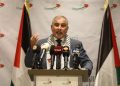
The committee, chaired by Ali Shath, held several meetings after his return from Washington following the Peace Council conference. Another meeting took place after the outbreak of the war involving Iran to review the rapidly changing situation.
“The conditions are extremely difficult,” the source said. “No one knows how long this will continue.”
The official expressed concern that international attention may drift further away from the Palestinian issue due to the regional escalation with Iran, even though Gaza faces severe shortages of essential supplies.
Humanitarian conditions remain fragile. Reports warn of growing pressure on hospitals and municipal services responsible for healthcare and basic infrastructure for more than two million residents.
Aid deliveries have dropped sharply following tighter blockade measures, a change that local residents have already felt. International organizations have warned that medical and public service systems may struggle to continue functioning.
Signs of declining international engagement have also appeared within the Peace Council initiative itself. Indonesia recently suspended its participation in the proposed international stabilization force intended to operate in Gaza.
Indonesian Foreign Minister Sugiono said discussions concerning the Peace Council and the stabilization force have effectively stopped due to the ongoing war involving Iran. President Prabowo Subianto added that Indonesia could withdraw from the council if the initiative fails to deliver meaningful benefits for Palestinians.
Shortlink for this post: https://daysofpalestine.ps/?p=72856