DaysofPal — In the Gaza Strip, the holy month of Ramadan is no longer a season of celebration but a daily struggle for families trying to secure even the most basic meal amid one of the harshest humanitarian crises in decades.
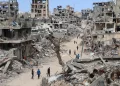
The traditional iftar table, once a symbol of generosity, abundance, and family unity, has become a stark reflection of how deeply life has changed, from the destruction of homes to the scarcity of food.
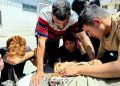
Across sprawling displacement areas, the image of Ramadan has transformed. Rows of tightly packed tents now stand where neighborhoods once existed, plastic tables replace festive spreads, and conversations revolve less around dishes and more around a single urgent question: how to secure enough food to last until the next day.
Before the war, preparations for Ramadan began weeks in advance. Markets were crowded, shopping lists carefully planned, and homes readied to welcome guests. Today, survival has replaced celebration.
Ahmad Abu Jarbou, displaced from Rafah to Deir al-Balah, described Ramadan meals as a daily struggle.
“I wake up every morning thinking about what we will eat at sunset; it’s no longer about variety or dishes, just a meal that keeps the children going until suhoor,” he said.
Abu Jarbou once owned a legume shop in Rafah that provided a stable income, but both his business and home were destroyed.
Now, he says, the family relies mostly on canned goods delivered in food parcels.
“The difference isn’t only in the number of dishes. ” It’s in the feeling of safety we used to have,” he added.
In western Gaza City, Siham Miqdad lives with her family in a tent near the port. Her husband is injured and unable to work, leaving the family without income.
She says charity kitchens have become the main source of iftar, adding that “we stand in line for hours; sometimes we get a meal. Sometimes we return to the tent with nothing but worry.”
The psychological strain, she added, can be worse than hunger itself, saying that “Children ask for foods they used to have during Ramadan. It’s hard to explain what helplessness means to a child.”
She noted that even the cost of a simple meal has multiplied, while stable income has vanished, making buying food nearly impossible.
Although some markets remain open, purchasing power has collapsed.
Mohammed Haniyeh, who lost his job at a beverage shop destroyed in the war, said visits to the market have become aimless.
“We ask about prices, then leave; bread is the only option,” he said.
He described the pain of being unable to provide foods his children once considered essential to Ramadan.
“We used to prepare for the month. Now we wait for whatever aid arrives.” He added
The hardship reflects not only individual suffering but also the broader collapse of Gaza’s economy.
Thousands of small businesses have been destroyed, income sources cut off, and prices of basic goods driven up by shortages and difficulties bringing supplies into the enclave.
Most families now depend entirely or partially on humanitarian assistance, a reality that pits personal dignity against daily necessity.
Ramadan’s iftar table has thus become a living indicator of poverty and food insecurity and of the widening gap between memory and present reality.
For many families, absence is as painful as hunger, as those killed, detained, or missing have left empty places around the meal.
Families try to preserve what remains of Ramadan’s spirit, a small decoration on a tent entrance, a candle lit at sunset, or a carefully arranged plate, despite its simplicity.
“We may not have what we once had,” Abu Jarbou said, adding, “but we try to hold on to the meaning of gathering together.”
In Gaza, the table has changed, the dishes have diminished, and many loved ones are gone. Yet the act of sitting together at sunset, even around the humblest meal, remains a quiet form of resilience in the face of overwhelming hardship.
Shortlink for this post: https://daysofpalestine.ps/?p=72436