DaysofPal – Following the reopening of the Rafah border crossing with Egypt, Israel imposed delays and stringent controls, allowing only five Palestinian patients to leave Gaza for medical treatment and only twelve people to return to the territory.
The long-anticipated reopening on Monday was expected to ease more than 18 months of a severe military siege on Gaza. Instead, Israeli authorities maintained tight security measures and a complex clearance process that sharply limited movement in both directions and prevented the free passage of goods through the crossing.
Israeli officials had previously indicated that up to 50 people would be allowed to travel in each direction. The actual numbers fell far short of that promise, with only five medical evacuees exiting Gaza and a single bus carrying 12 returnees entering the enclave.
Families in Gaza had waited for hours in the hope that dozens of relatives stranded in Egypt would be able to come home. Those expectations were dashed when only a small group was cleared to cross after lengthy security procedures imposed by the Israeli military at the terminal. The bus that entered Gaza early Tuesday marked the first such return through Rafah in more than 18 months.
Under current restrictions, only Palestinians who left Gaza during the war are eligible to re-enter through Rafah, and only after undergoing extensive security screening. At the same time, medical evacuations remain severely limited. Gaza health officials estimate that around 20,000 children and adults urgently in need of treatment outside the Strip are waiting for permission to leave.
Footage aired by Egypt’s state-run Al-Qahera News showed ambulances lining up for hours on the Gaza side of the border, prepared to transport patients who were ultimately unable to cross.
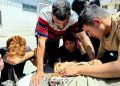
Reporting from Khan Younis, Al Jazeera correspondent Tareq Abu Azzoum spoke with Randa Abu Mustafa, whose son lost his eyesight due to injuries sustained during Israel’s war on Gaza. He was among the five patients approved to leave. Another mother, Shimaa Abu Rida, said her daughter Joumana was critically wounded in an Israeli air attack and remains trapped in Gaza while waiting for approval to travel.
Large crowds continued to gather near the crossing, hoping to pass into Egypt. With tens of thousands of patients awaiting clearance, most were turned away, reinforcing fears that access to care remains tightly controlled. The continued blockage of medicines and humanitarian supplies has left Palestinian lives dependent on Israeli decisions, Abu Azzoum reported.
Tom Fletcher, the United Nations undersecretary-general for humanitarian affairs, said the limited reopening of Rafah does not meet humanitarian needs. He stressed that the crossing must operate as a genuine humanitarian corridor capable of delivering life-saving assistance at scale.
Qatar, which helped broker the ceasefire agreement that Israel continues to violate, described the reopening as a positive step but called for full implementation of the deal. In a statement, Doha urged Israel to allow sustained and unrestricted humanitarian access to Gaza and reaffirmed its support for Palestinian rights under international law.
Before Israel’s genocidal war on Gaza, Rafah served as the enclave’s primary gateway for travel. All other crossings connect Gaza to Israel. Israeli forces seized control of the Palestinian side of Rafah in May 2024.
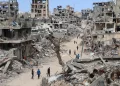
Israeli attacks continued across Gaza on Monday. At least three Palestinians were killed in separate incidents in central and northern areas of the Strip. According to the Palestinian news agency Wafa, Israeli drones struck a location near a funeral gathering in Nuseirat, killing two people and wounding several others. Another Palestinian was killed in Halawa Camp in Jabalia.
Palestinian health authorities say these latest attacks raise the total number of Palestinians killed since October 2023 to at least 71,800, with more than 171,500 wounded.
Shortlink for this post: https://daysofpalestine.ps/?p=71891