
DaysofPal – The Gaza Center for Human Rights expressed deep concern over the emerging arrangements for the partial reopening of the Rafah border crossing between Gaza and Egypt, highlighting the increasing Israeli security conditions and regulatory restrictions that undermine the fundamental right to freedom of movement.
The center emphasized that this right, which includes the ability to travel and return, is guaranteed under international human rights law and must not be subjected to arbitrary procedures or political and security considerations that strip it of its meaning.
The center stated that restrictions on travel should only be applied in the narrowest sense, following principles of necessity, without discrimination or collective punishment. Special protection must be afforded to patients and the wounded, who have an urgent humanitarian right to leave Gaza for medical treatment. Denying this right or linking it to security measures or numerical quotas is unacceptable.
The rights group warned that any security requirements, limits on the number of travelers, or unequal ratios between those leaving and entering could deprive thousands of Palestinians of their right to travel. Such measures would transform the crossing from a civilian humanitarian facility into a tool for political pressure and population engineering, violating the international ban on forced displacement.
The Gaza Center for Human Rights expressed particular concern over statements by a retired Israeli general advising the Israeli military about plans to build a large facility in southern Gaza, near Rafah. The proposed site would be under strict Israeli security control and equipped with advanced monitoring and facial recognition technology, linked to the limited reopening of Rafah. Palestinians wishing to leave the Strip or forced to stay would be effectively confined within this controlled environment.
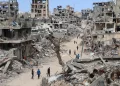
The center condemned proposals that seek to allow more Palestinians to exit than to return, describing them as a continuation of illegal transfer plans. It warned that using Rafah in this manner would reshape Gaza’s population while Israel continues to devastate the enclave, having committed two years of genocidal warfare, including mass killings, widespread destruction, and deliberate deprivation of food, water, and medical treatment.
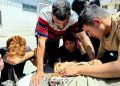
The center highlighted the dire situation for patients and the wounded. According to the Ministry of Health, approximately 20,000 patients have complete medical referrals awaiting permission to travel abroad. Severe shortages of medicines, medical supplies, and specialized services, along with the destruction of healthcare infrastructure, exacerbate the crisis.
Among these patients, 440 are classified as life-threatening cases, and 1,268 have died waiting for treatment. Cancer patients are among the most affected, with roughly 4,000 on urgent waiting lists, including 4,500 children. Only 3,100 patients have managed to leave Gaza since the closure of Rafah on May 7, 2024.
The center warned that these conditions could trigger unpredictable health consequences, including increased deaths and swelling patient lists for overseas treatment. It firmly rejected any Israeli security vetting of travelers, emphasizing that such procedures would violate the right to freedom of movement and transform travel into a privilege contingent upon approval by an occupying power that has no legal authority over civilian crossings or population movement.
Gaza’s rights group stressed that full, regular, and unrestricted operation of Rafah is the last lifeline for thousands of patients. It called for the smooth exit of travelers, particularly the sick and wounded, and the unhindered entry of medical supplies, medications, and essential humanitarian aid. Any measures to manage the crossing must be strictly civilian and humanitarian, entirely separate from Israeli security and demographic objectives, in order to protect the fundamental rights of the population, foremost among them the right to life, dignity, and freedom of movement.
Shortlink for this post: https://daysofpalestine.ps/?p=71772