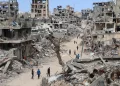
DaysofPal – Civil defense authorities in the Gaza Strip warned on Thursday that the territory is experiencing an “unprecedented catastrophe” affecting every aspect of daily life, urging urgent international intervention to prevent a complete humanitarian breakdown. The Gaza Municipality reiterated the warning, emphasizing the urgent need for necessary supplies to maintain water services.
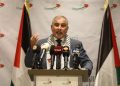
Mahmoud Basal, spokesperson for Gaza’s Civil Defense, said the situation has reached catastrophic levels, citing the near-total absence of safe shelter, the constant threat of bombardment in residential areas and streets, and the collapse of the healthcare system. Hospitals, he added, are no longer capable of meeting the rapidly growing medical needs.
Basal emphasized that the scale of suffering demands swift and effective international action, calling on humanitarian organizations to step in to save the lives of the wounded, the sick, children, and displaced families.
These cautions are issued as Gaza experiences recurrent episodes of extreme cold that are made worse by a severe lack of heating supplies. Displaced people and other vulnerable groups, especially the injured, are struggling to survive under extremely harsh conditions inside temporary shelters.
The population’s hardship deepens with every cold spell, while Israel continues to impose tight restrictions on the entry of essential goods, humanitarian aid, and medical supplies. The continued closure of the Rafah crossing has also prevented patients and wounded individuals from traveling abroad for urgently needed treatment.
In a related development, the Gaza Municipality reported that the city is facing an acute water crisis due to a severe supply shortage. The disruption followed damage to the Mekorot water line, which was broken during Israeli military activity east of the city.
According to the municipality, the damaged pipeline had been providing approximately 70 percent of Gaza City’s current water needs. This disruption comes after extensive destruction of water infrastructure, including the destruction of nearly 85 percent of the city’s water wells, drastically reducing available supplies.
Before the war, daily water demand exceeded 100,000 cubic meters. Current availability represents only a small fraction of that level, leaving a deficit of roughly 90 percent compared with pre-war conditions. The crisis has been further intensified by the destruction of about 150,000 linear meters of water pipelines and the demolition of the desalination plant in the Sudaniyya area in the city’s northwest.
The municipality explained that the water crisis stems from widespread damage to water sources and infrastructure caused by the Israeli war, with the most recent blow being the rupture of the Mekorot line during land-clearing operations by Israeli forces. As a result, large areas have been cut off from water supplies, including the Old City, Zeitoun, Sabra, Tel al-Hawa, and western neighborhoods.
Municipal officials stressed the urgent need for basic materials to sustain water services, including cement, technical equipment, spare parts, pipes of various sizes, and pumps to enhance water flow and improve network efficiency.
They also highlighted the need for heavy and light machinery after most municipal equipment was destroyed during the war, along with fuel sources, generators to operate wells, oils, and operational materials essential for continued work.
Since May 2024, Israel has occupied the Palestinian side of the Rafah crossing as part of the ongoing genocidal war on Gaza, carried out with U.S. support since October 2023. The offensive has killed more than 71,000 Palestinians and wounded over 171,000, the majority of them women and children.
Israel has imposed a suffocating blockade on Gaza for more than 18 years. Today, around 2.4 million Palestinians, including approximately 1.5 million displaced people, are living under conditions widely described as catastrophic.
Shortlink for this post: https://daysofpalestine.ps/?p=71769