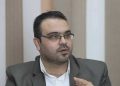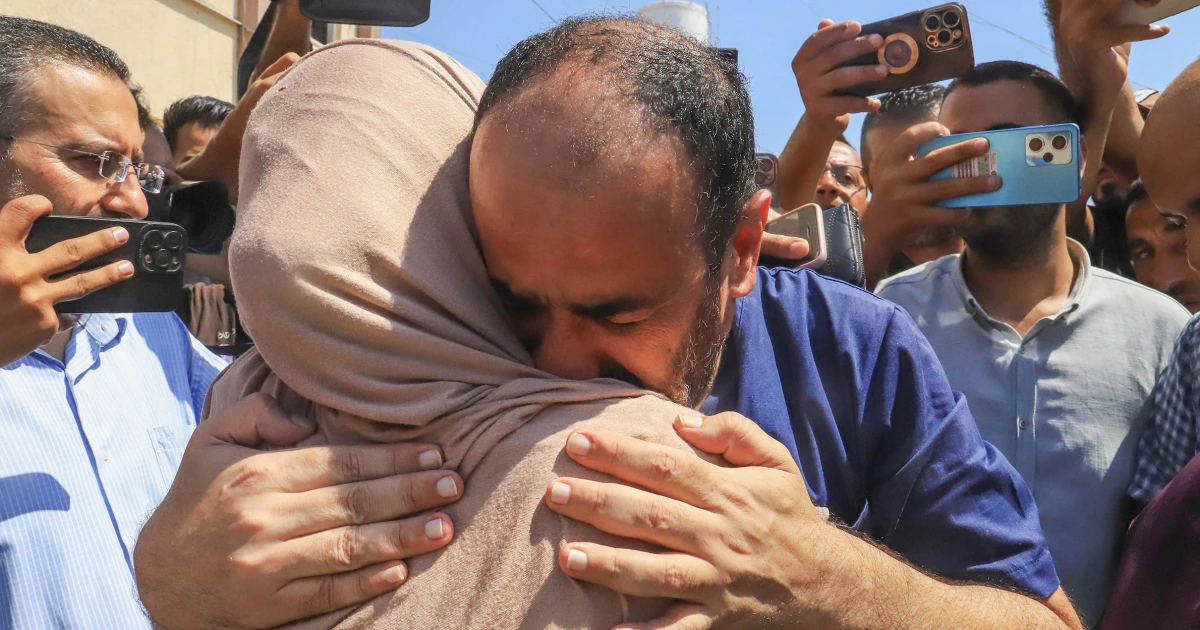
DaysofPal- The release of Palestinian detainee Musab Madoukh from Israeli custody brought no relief from suffering, but instead revealed a devastating personal loss.
Madoukh, 40, learned after his release that his wife and six children had been killed in an Israeli airstrike that destroyed their home in Gaza City while he was still imprisoned.
Madoukh was freed on October 13 after spending one year and eight months in Israeli detention.
He was among roughly 1,700 Palestinians from the Gaza Strip released under a ceasefire and prisoner exchange agreement mediated by Egypt, Qatar, and Turkey, which took effect on October 10.
Many of those released arrived home in severely weakened physical and psychological condition, with former detainees reporting torture, starvation, and medical neglect during their imprisonment.
Madoukh said he was arrested on March 18, 2024, during an Israeli military raid on Al-Shifa Medical Complex in Gaza.
He described undergoing a violent field interrogation before being transferred, handcuffed and beaten, to the Sde Teiman detention facility.
He spent nearly two months there before being moved to Negev Prison, where he was repeatedly transferred between cells and sections.
Madoukh said detainees were routinely beaten, denied medical care and medication, and prevented from meeting lawyers or receiving family visits, conditions he described as systematic abuse and a violation of international law.
Speaking to Palestine newspaper, Madoukh accused Israeli occupation of committing war crimes against Palestinian prisoners and warned that proposed legislation restricting detainees’ rights would further legitimize violence against them.
He called on international and human rights organizations to take concrete action to end the ongoing abuses.
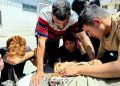
The most painful revelation came after his release. Madoukh learned that an Israeli airstrike had hit his family home in the Sabra neighborhood of southeastern Gaza City, killing his wife and six children, the oldest of whom was 15 years old.
The same attack also killed three of his brothers, his sister, her husband, and their children, bringing the total number of family members killed to 19, according to Madoukh.
He said the strike occurred on January 29, 2024, weeks before his arrest.
At the time, Madoukh said he was unaware of the tragedy due to intense bombardment, communication blackouts, and the danger of reaching the area.
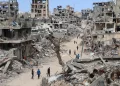
The destruction and continued fighting also delayed the recovery of bodies, with some remains retrieved nearly a year later using basic tools and personal efforts, amid a lack of heavy machinery.
Madoukh said the memory of his eldest son, Bashir, remains with him constantly. “He was deeply attached to me,” he said, adding that his son’s smile continues to follow him everywhere.
He said he sometimes visits the ruins of his former home, speaking to his wife and children as if they were still present.
“But they are gone forever,” he said.
Human rights groups say Madoukh’s experience reflects a wider reality for many Palestinian prisoners.
More than 10,000 Palestinians, including women and children, remain in Israeli prisons, according to prisoner advocacy organizations, many under conditions described as harsh and inhumane, with reports of deaths resulting from torture and medical neglect.
As former detainees return to Gaza bearing physical and psychological trauma, many are confronted with the destruction of their homes and the loss of their families, an outcome rights groups say highlights a broader pattern of collective suffering and ongoing violations of international humanitarian law.
Shortlink for this post: https://daysofpalestine.ps/?p=70855