
DayofPal— The International Court of Justice (ICJ) has ruled that Israel must allow humanitarian aid to flow freely into Gaza, including through the UNRWA, rejecting Israeli allegations that the UN agency involved in Al-Aqsa Flood Operation.
In its advisory opinion, the court stated that Israel, as the occupying power, is obligated to ensure that the “basic needs” of Gaza’s population are met, including access to food, water, fuel, shelter, and medical supplies.
ICJ President Yuji Iwasawa said Israel had failed to substantiate its claims that UNRWA employees were affiliated with Hamas or other armed groups.
“The court finds that Israel has not substantiated its allegations that a significant part of UNRWA’s employees are ‘members of Hamas … or other terrorist factions’,” Iwasawa said.
Before Israel banned UNRWA’s operations in Gaza earlier this year, the agency served as the enclave’s main humanitarian lifeline. It supported roughly 1.4 million Palestinian refugees, ran schools for more than 300,000 children, operated dozens of health clinics, and distributed food and cash assistance to hundreds of thousands of families.
UNRWA also coordinated emergency shelters, mental health programs, and community initiatives, effectively acting as a de facto public service provider amid Israel’s blockade. Despite the ban, the agency has continued limited operations under severe restrictions.
While the ICJ’s opinion reinforces UNRWA’s mandate, it remains advisory, meaning it carries moral and legal weight but cannot be directly enforced.
UNRWA Commissioner-General Philippe Lazzarini called the court’s decision “unambiguous,” stating that Israel “is under an obligation to agree to and facilitate relief schemes provided by the United Nations and its entities, in particular UNRWA.”
Israel, however, swiftly rejected the ruling. Foreign Affairs spokesperson Oren Marmorstein reiterated Israel’s previous allegations and said it “fully upholds its obligations under international law” while rejecting what he described as “the politicization of international law.”
Israel’s accusations against UNRWA prompted several donor nations, including the United States, United Kingdom, Germany, Canada, and the European Union, to suspend funding earlier this year.
Most have since resumed contributions after two independent investigations, led by Catherine Colonna and the UN Office of Internal Oversight Services (OIOS), found no evidence substantiating Israel’s claims, though they acknowledged that isolated cases of misconduct may have occurred.
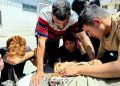
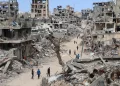
Gaza’s humanitarian crisis continues to worsen. Aid restrictions, combined with widespread destruction and displacement, have led to famine conditions, particularly among children and the elderly.
According to the World Health Organization, families are enduring “overwhelming injuries, a collapsed healthcare system, and outbreaks of disease” fueled by the destruction of water and sanitation infrastructure.
Since the war began two years ago, more than 68,000 Palestinians have been killed, according to Gaza’s health authorities, with thousands more dying from hunger and preventable illness.
Despite multiple international investigations and arrest warrants against Israeli leaders for alleged war crimes, enforcement mechanisms remain limited. For Gaza’s population, the court’s ruling offers a rare moment of international recognition, but no guarantee of relief.
Shortlink for this post: https://daysofpalestine.ps/?p=68694