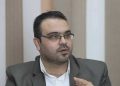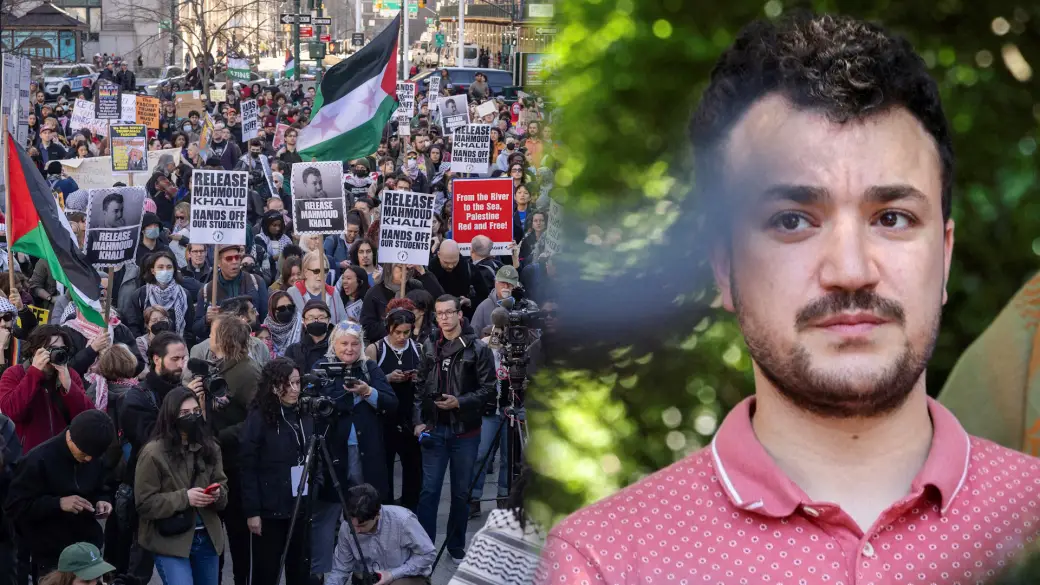
DaysofPal- Mahmoud Khalil, a prominent figure in pro-Palestinian activism at Columbia University, became the target of a controversial arrest under the Trump administration’s renewed crackdown on foreign nationals involved in Palestinian advocacy.
The case has drawn widespread attention, highlighting tensions between free speech, immigration policy, and political activism.
Background on Mahmoud Khalil
Mahmoud Khalil grew up in a Palestinian refugee camp in Syria before working at the British Embassy in Beirut.
He later moved to the United States, where he pursued higher education, earning a master’s degree from Columbia University’s School of International and Public Affairs (SIPA) in December.
Khalil was a graduate student living in a dormitory off-campus when his arrest occurred.
Khalil holds permanent residency status in the U.S., having obtained a green card, and is married to an American citizen who is eight months pregnant.
Despite his legal standing as a permanent resident, the Trump administration targeted him for deportation, citing concerns over his involvement in pro-Palestinian protests.
Arrest and Deportation
On Monday, U.S. immigration officials arrested Khalil at his university residence and detained him at a U.S. Immigration and Customs Enforcement (ICE) facility in New Jersey.
President Donald Trump celebrated the arrest, labeling Khalil—without providing evidence—as a “radical foreign student pro-Hamas.”
Trump described Khalil’s detention as part of broader efforts to deport individuals deemed hostile to U.S. interests, stating that his presence in the country was “contrary to our national and foreign policy interests.”
Notably, Khalil has not been charged or convicted of any crime.
Instead, the administration revoked his green card, claiming his views aligned with anti-Semitic ideologies—a claim contested by civil rights groups and Khalil’s supporters.
Role in Pro-Palestinian Activism
Khalil emerged as a key negotiator during the Students for Palestine protests at Columbia University in the spring of 2024.
While he did not participate in occupying buildings, he acted as a mediator between university administrators and protesters advocating for divestment from companies supporting the Israeli military.
His role placed him at the forefront of campus activism, making him a visible target for government scrutiny.
Hours before his arrest, Khalil expressed fears about being silenced for his vocal support of Palestine.
In interviews, he criticized the Trump administration for using protesters like himself as scapegoats to advance its agenda against higher education institutions.
Reactions and Criticism
The New York Civil Liberties Union condemned Khalil’s detention, describing it as unlawful, retaliatory, and an attack on free speech.
They argued that the move represented a misuse of immigration laws to suppress pro-Palestinian expression, warning of its chilling effect on academic freedom and First Amendment rights.
Columbia University’s Student Workers Union also criticized the administration’s actions, accusing the university of complicity in allowing Homeland Security agents onto campus.
The union accused Columbia of prioritizing its financial interests over protecting international students, asserting that such actions undermine universities’ role as bastions of free thought and debate.
Additionally, the Department of Education sent letters to 60 major universities, including Columbia, Harvard, Yale, and several University of California campuses, threatening cuts to federal funding unless they address allegations of anti-Semitism on campus.
Critics argue this move further politicizes discussions around Israel-Palestine, stifling open dialogue.
Broader Implications
Khalil’s arrest marks one of the first significant actions taken by the Trump administration since returning to power in January.
It reflects the administration’s commitment to targeting foreign students involved in pro-Palestinian activism, framing their advocacy as contrary to U.S. interests. Secretary of State Marco Rubio echoed this sentiment, pledging to revoke visas or green cards for alleged Hamas supporters in the U.S.
Civil rights advocates warn that these policies set a dangerous precedent, potentially chilling dissenting voices and undermining principles of academic freedom.
As federal immigration agents reportedly seek to detain additional foreign students beyond Khalil, the situation underscores growing concerns about the intersection of immigration enforcement and political repression.
Mahmoud Khalil’s arrest highlights the complex interplay between immigration policy, free speech, and political activism in the United States.
As a permanent resident and graduate student, Khalil’s detention raises questions about the limits of protected expression and the consequences of expressing solidarity with marginalized causes.
His case serves as a stark reminder of the challenges faced by activists navigating increasingly polarized political landscapes—and the need for vigilance in defending fundamental freedoms.
Shortlink for this post: https://daysofpalestine.ps/?p=61305