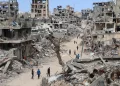

DaysofPal- Israel has reportedly cut off electricity to Gaza, a move that is part of its broader strategy to pressure Hamas into agreeing to changes in the terms of the ceasefire agreed upon in January.
The blockade on humanitarian aid, imposed earlier in March, is also seen as an attempt to force Hamas into extending the first phase of the ceasefire and securing the release of more captives. Israel’s ultimate goal is to avoid entering the second phase, which would involve a permanent end to the war.
This decision has drawn widespread criticism. Humanitarian organizations, human rights groups, and even some of Israel’s allies have condemned the move, citing its humanitarian consequences and violation of international law prohibiting collective punishment of civilians.
However, the situation may not be as dire as initially portrayed. Israeli Energy Minister Eli Cohen announced on social media that electricity to Gaza had been cut off, but reports suggest that the electricity supply had already been largely halted after the October 2023 Hamas-led attacks on Israel. In November, power was restored to a desalination plant in central Gaza, though it now relies on stored power and generators due to ongoing Israeli shelling.
In addition to the electricity cut, Israel has resumed military strikes in Gaza, with heavy bombardment in Rafah, resulting in civilian casualties. This is seen as an attempt to alter the ceasefire terms to Israel’s advantage, particularly in regard to its military presence in Gaza.
Hamas has sharply criticized the blockade, accusing Israel of “cheap blackmail” and “collective punishment.” It has condemned the cutting off of electricity and supplies as a violation of international law and a war crime.
Israel’s actions have received support from the United States, which views the blockade as a necessary measure to compel Hamas to comply with a proposal for extending the ceasefire’s first phase and securing the return of more Israeli captives. However, many other nations, including Egypt, Qatar, Saudi Arabia, and Jordan, have opposed the blockade, stressing that humanitarian aid should not be used as leverage in political negotiations.
The ongoing negotiations, particularly in Qatar, could be impacted by these developments. While Hamas has expressed a willingness to engage in talks, the situation remains tense as both sides work toward securing their objectives, with the US playing a key role in facilitating the discussions.
The impact of these actions on the broader peace process remains uncertain, but the international community’s response indicates a growing concern over the humanitarian crisis in Gaza.
Shortlink for this post: https://daysofpalestine.ps/?p=61302