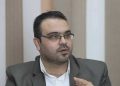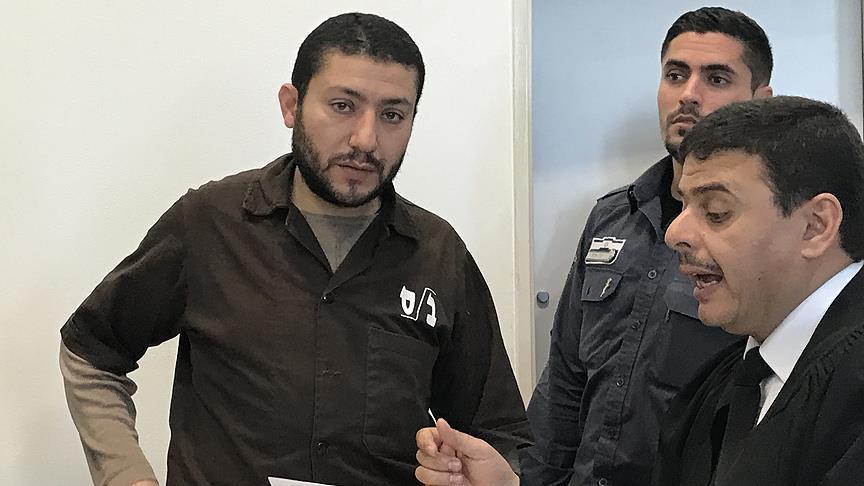
DaysofPal- On February 1, 2025, Muhammad Murtaja (48), a former director of the Turkish TIKA office in Gaza, stepped out of an Israeli prison into a world he barely recognized.
Eight years behind bars had transformed not only his life but also the landscape of his homeland. For Murtaja, freedom was more than just leaving confinement; it marked what he described as “a new birth.”
Murtaja’s ordeal
Murtaja’s ordeal began on February 12, 2017, when he was arrested at the Beit Hanoun checkpoint while traveling to Ankara for a training conference. Accused by Israel of “membership in the Hamas movement” and “providing aid to Palestinians in Gaza,” charges he vehemently denied, Murtaja was sentenced to nine years in prison in 2018. His work, he insists, was purely humanitarian, focused on development projects aimed at improving the lives of Gazans.
Inside the occupation’s prisons, Murtaja endured systematic dehumanization. Physical and psychological torture became part of his daily reality. Denied medication for high blood pressure and cholesterol, he recounted how prison doctors dismissed his suffering with callous indifference: “As long as you are breathing, you do not need treatment.”
Psychological torment reached its peak during periods of war, when the prison administration exploited the uncertainty of detainees by spreading false information about their families and homes being destroyed. Isolated from the outside world, without access to lawyers or radios, prisoners lived in perpetual fear and despair.
One particularly cruel form of humiliation involved forcing prisoners to mimic animal sounds—”howling like dogs or braying like donkeys”—as a means of degradation. Some were shackled for months, leading to severe injuries and even amputations. Murtaja recalled, “They didn’t need to shoot us dead—they just let us die slowly.”
Deprivation of Family
Of all the forms of torture, none cut deeper than the deprivation of family. Since 2018, Murtaja’s family was permitted only one visit, leaving him isolated from those who mattered most. Upon his release, he found himself reunited with a daughter, Sarah, whom he last saw as a toddler. Now nine years old, she looked at him with wide eyes, trying to reconcile this stranger with the father she remembered faintly from childhood photographs.
Holding her in his arms, Murtaja whispered, “Imagine seeing your child for the first time after nine years, as if he were a stranger.” The reunion brought joy but also a profound ache, knowing that lost years could never be reclaimed.
A Changed Reality
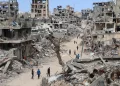
Walking through the streets of Gaza for the first time in eight years, Murtaja struggled to comprehend the devastation before him. Al-Mashtal Street, once vibrant with life, now lay in ruins—homes reduced to rubble, roads covered in debris. Standing amidst the wreckage of his neighborhood, he paused, whispering a prayer: “Oh God, compensate the people of Gaza with something better.”
For Murtaja, freedom is bittersweet. While he breathes fresh air and feels sunlight on his skin, he knows that thousands of others remain imprisoned, some serving sentences of 15, 20, or 30 years—or even life. “The joy is incomplete,” he said, “because we left them there.”
Finding His Life Again
Murtaja’s journey toward rebuilding his life mirrors the broader struggle of Gaza. Freedom, he realizes, is not merely stepping outside prison walls; it is finding a place within a shattered reality, among memories locked away in cells and the harsh truths of the present. As his daughter follows him closely, her gaze filled with both wonder and apprehension, Murtaja understands that his battle has only begun.
In his own words, “Freedom is not only leaving prison, but finding a place for myself in this new reality, among the ruins of my city, and among the memories I left behind the walls of the cell.”
Muhammad Murtaja’s story is one of resilience and hope—a testament to the enduring spirit of a people determined to rise above oppression, even as they navigate the complexities of a changed world.
Shortlink for this post: https://daysofpalestine.ps/?p=60523