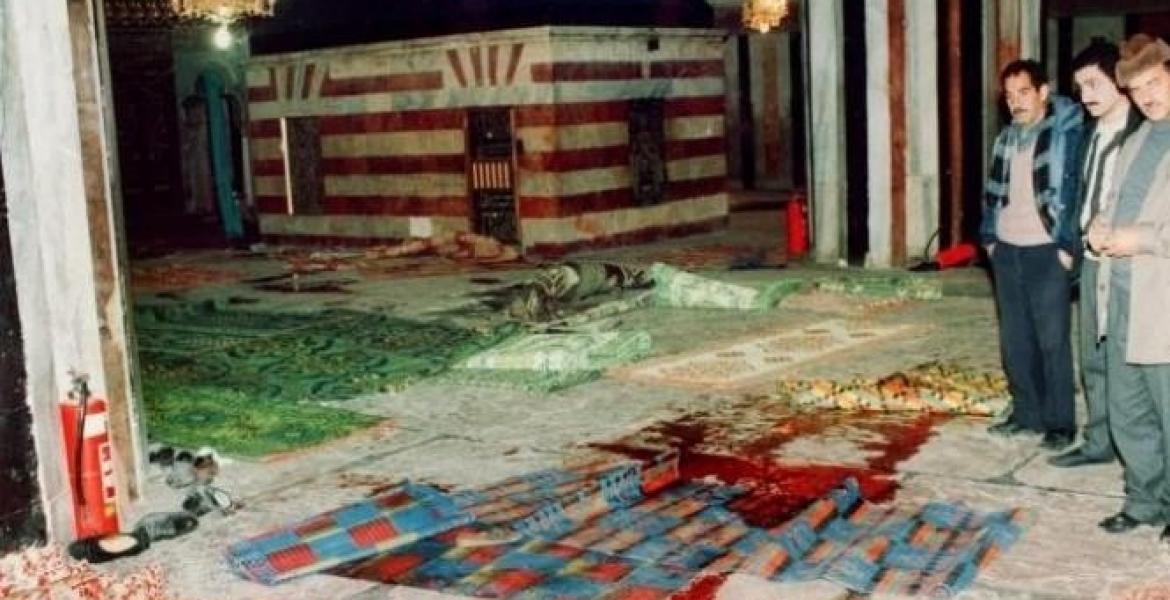
Today marks the 31st anniversary of the Al-Ibrahimi Mosque massacre in occupied Hebron, where an Israeli settler brutally murdered 29 Palestinian worshipers.
Massacre During Prayer
On February 25, 1994, Baruch Goldstein, an Israeli extremist settler, opened fire on hundreds of Palestinian worshipers during the noon prayer at Al-Ibrahimi Mosque. The attack left 29 worshipers dead and at least 150 others injured before survivors overpowered and killed Goldstein.
Israeli occupation forces then sealed the mosque’s doors for hours, preventing medics from reaching the victims, further exacerbating the humanitarian tragedy.
Attacking Mourners and Protesters
The massacre sparked mass demonstrations across occupied Palestine. Outraged Palestinians took to the streets to condemn the crime, only to be met with further violence.
Israeli forces attacked mourners and protesters, killing dozens. By the end of the day, the number of Palestinian victims due to Israeli violence had reached around 60, with hundreds more injured.
The outrage spread beyond Palestine, as demonstrations erupted in Arab and Muslim countries, demanding justice and accountability for the massacre.
No Accountability
Despite widespread condemnation from Arab and international bodies, Israel dismissed the massacre, claiming Goldstein was mentally ill and undergoing treatment. This narrative allowed Israeli occupation authorities to evade legal responsibility and continue enabling settler violence.
On March 14, 1994, the United Nations Security Council expressed shock and condemned the “appalling massacre” committed against Palestinian worshipers during the holy month of Ramadan.
The UNSC urged Israel to take measures to confiscate arms from Israeli settlers to prevent further violence, but no substantial action was taken.
Three decades later, Palestinians continue to endure the most violent wave of Israeli settler and military aggression.
Plan Beyond the Massacre
The Al-Ibrahimi Mosque massacre was not an isolated act of violence; it was part of a broader Israeli strategy to impose control over the mosque.
Following the massacre, Israeli occupation authorities shut down the mosque for six months under the pretext of conducting investigations. They then implemented a plan to divide the mosque, allocating 60% of its space to a synagogue for settlers.
Strict security measures were enforced against Palestinians, including the installation of electronic gates and severe restrictions on entry.
Today, Israeli settlers control the majority of the mosque, while occupation forces routinely prevent the Adhan (call to prayer) from being broadcast.
In 2023 alone, Israeli forces prevented the Adhan from being broadcast 674 times while systematically restricting Palestinian access through checkpoints and entry bans.
Shortlink for this post: https://daysofpalestine.ps/?p=60882