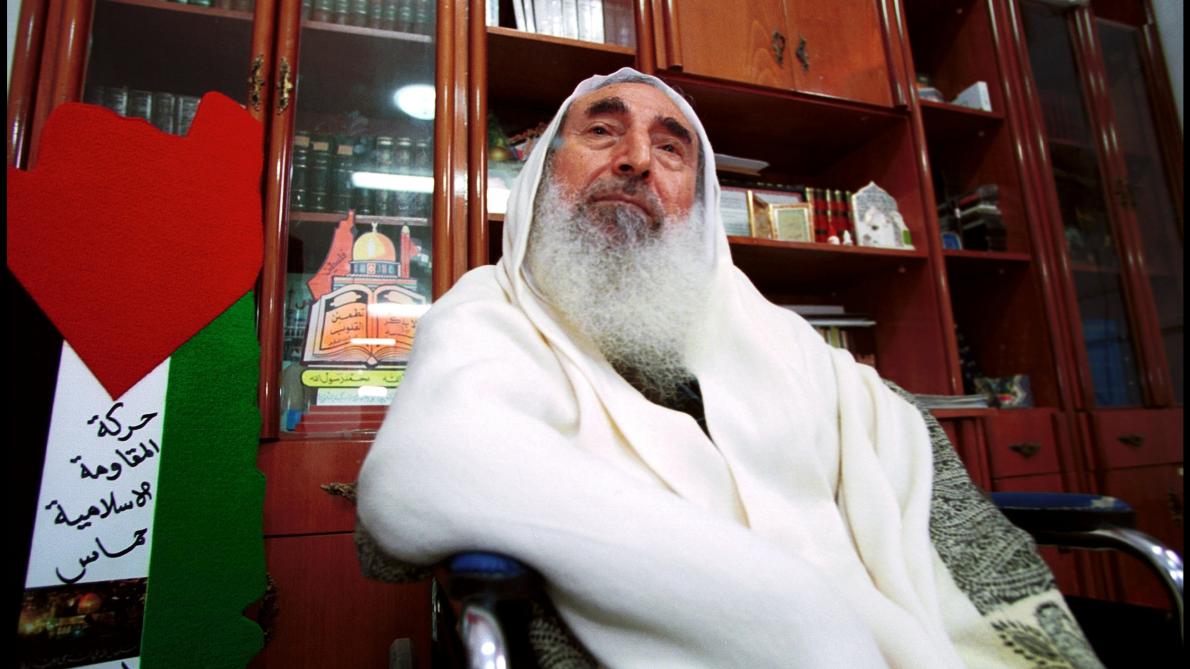
DaysofPal- March 22 marks the 22nd anniversary of the killing of Ahmed Yassin, the founder of the Islamic Resistance Movement (Hamas), who was assassinated by Israeli occupation forces in 2004 shortly after leaving dawn prayers.
His killing is widely seen as a turning point in the trajectory of the Palestinian cause. It drew global attention and renewed focus on the nature of resistance and the broader conflict over land, identity, and religious sites.
That morning was not only the end of a man’s life but also the beginning of a lasting symbol. Yassin became an enduring figure associated with resilience and steadfastness, embodying determination in the face of harsh conditions.
The assassination took place during a period marked by efforts to weaken Palestinian leadership. Instead, it reinforced the prominence of resistance and strengthened public support for it.
Early Life and Formation
Ahmed Yassin was born in 1936 in the village of Al-Jura near Ashkelon. His family was displaced to the Gaza Strip in 1948 during the mass displacement of Palestinians, an experience that shaped his political awareness and sense of injustice.
At the age of sixteen, he suffered an accident that left him paralyzed. Despite this, he pursued education and community work, becoming a teacher of Arabic and Islamic studies and later a preacher in Gaza’s mosques, where he gained recognition for his strong and direct message.
Following the 1967 war, he became active in social and religious initiatives and helped establish the Islamic Center in Gaza, which later served as a foundation for organized activism that contributed to the creation of Hamas.
Founding Hamas and Years of Confrontation
With the outbreak of the First Intifada in December 1987, Yassin and a group of activists announced the founding of Hamas, establishing a structured movement focused on resistance.
He was arrested in 1989 along with hundreds of others and sentenced to life imprisonment plus additional years on charges related to founding the movement and encouraging resistance activities. Despite imprisonment, he remained a powerful figure in public consciousness.
In 1997, he was released as part of a prisoner exchange and returned to Gaza, where he resumed organizing the movement. His influence helped consolidate support and unify its ranks. During this period, he faced ongoing restrictions and pressure but continued to emphasize resistance and the importance of internal unity.
He survived two assassination attempts before being killed, reflecting persistent efforts to target him and the significance of his influence.
Assassination and Lasting Legacy
On March 22, 2004, Israeli forces targeted Ahmed Yassin during his return from dawn prayers, killing him along with several of his companions. The event triggered widespread protests across Arab and international cities.
Yassin is remembered not only as an organizational leader but also as a figure who articulated a broader vision centered on perseverance, sacrifice, and maintaining a connection between generations and their national cause. He also emphasized the importance of prisoners’ issues and national unity.
His assassination left a deep impact on Palestinian political life. Hamas continued to expand its political and organizational presence, culminating in its victory in the 2006 legislative elections, reflecting the lasting influence of the foundation he helped build.
Shortlink for this post: https://daysofpalestine.ps/?p=73186