DaysofPal – The bodies of at least 135 Palestinians have been recovered from beneath the rubble across the Gaza Strip, as rescue teams finally gained access to devastated areas following the ceasefire that paused Israel’s two-year-long war on the enclave.
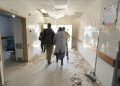
Medical and civil defense sources reported that the bodies were found in multiple locations on Saturday, with 43 taken to al-Shifa Hospital and 60 to al-Ahli Arab Hospital in Gaza City. Others were transferred to hospitals in Nuseirat, Deir el-Balah, and Khan Younis, where emergency workers continue to dig through collapsed buildings.
Hours before the truce went into effect at noon local time (09:00 GMT), medical officials reported that 19 people had been killed in Israeli airstrikes on Friday. Among the dead were 16 members of the Ghaboun family, whose home south of Gaza City was bombed in the early morning. Another Palestinian was killed in Sheikh Radwan, and two others in strikes near Khan Younis. It remains unclear whether some of the attacks took place after the ceasefire began.
A Trip Back to the Ruins
As Israeli forces withdrew from parts of the battered enclave and reopened the coastal al-Rashid Street, tens of thousands of displaced Palestinians began their painful journey back to what remains of their homes.
Witnesses described a haunting scene of mass return: “children, women, elderly, cars, vans, and donkey carts loaded with furniture,” all moving northward toward Gaza City.
“Families removed their makeshift tents to take and reset them over the ruins of their destroyed homes,” one Palestinian said. “This return is seen as historic, but it must be accompanied by real steps to ease the humanitarian crisis.”
The devastation in Gaza City is almost absolute. Months of relentless Israeli bombardment have left no functioning infrastructure, no clean water, and no electricity, only skeletal remains of buildings and piles of debris.
“There is now an urgent need for makeshift tents and mobile shelters for returning families,” said Moath Kahlout, a resident of Deir el-Balah. “Carrying what little they have, they march toward the unknown.”
For Naim Irheem, who lost his son and saw all his daughters wounded, the decision to return was both painful and defiant.
“I’m going to Gaza City even though there are no conditions for life there, no infrastructure, and no fresh water. Everything is extremely difficult, but we must go back,” he said.
“My son was killed, and all my daughters were wounded. Still, I want to return. We’ll pitch a tent and live in it, however it can be done.”
Defiance Amid Destruction
For many, returning home means confronting only ashes, yet it remains a symbol of resistance and endurance.
“For generations, Palestinians have shown remarkable resilience under Israeli occupation,” said Kahlout. “Each step back is not just a return, but an act of defiance and hope.”
Aisha Shamakh, another survivor, described her determination to see what remains of her home:
“We want to go see our homes, our homes that were destroyed at the start of the war. Floors have fallen on our children, but I can’t even describe to you the joy [of the ceasefire].”
In Gaza City, journalist Ibrahim al-Khalil said returning families bore “exhausted faces filled with both grief and joy.”
“Many told me they don’t know if their homes are still standing or reduced to rubble, yet they return clinging to hope,” he said.
Ahmed Abu Shanab, who made the long journey north, said, “We suffered a lot. We didn’t have enough space, and we literally could not sleep.”
Another resident, Maryam Abu Jabal, voiced the fear that shadowed many:
“We returned to the unknown. We don’t know if our homes still exist. We hope to God that our home is still standing.”
In the Sheikh Radwan neighborhood, Mohammed Sharaf surveyed what little remained:
“Everything has changed. We have returned to a disaster we cannot comprehend. We thought we would leave for a few days, now we’re back, and we have found nothing.”
Even amid death, mourning, and desolation, Palestinians are returning, not to comfort or safety, but to assert their presence and identity in the face of obliteration. Their journey back to the ruins of Gaza is not just a homecoming; it is a quiet act of defiance against a war that sought to erase them.
Shortlink for this post: https://daysofpalestine.ps/?p=68321