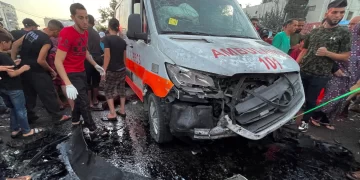
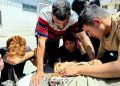
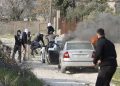
DaysofPal- A fresh wave of displacement is sweeping across Gaza as the Israeli occupation forces intensified their aerial and ground operations, forcing tens of thousands of Palestinians to flee Gaza City toward the central region.
For weeks, the Israeli forces had directed civilians to move southward to al-Mawasi, a narrow strip of land it designated as a “humanitarian safe zone.”
Yet al-Mawasi has long been unable to cope with the scale of displacement.
The area is overcrowded, lacking the most basic necessities such as clean water, sanitation, or adequate shelter.
Now, with the situation in the south spiraling, the Israeli forces have shifted their messaging, telling families to head to central Gaza.
This change has brought a massive influx of people into the Maghazi, Nuseirat, and Bureij refugee camps.
The already-cramped neighborhoods are now teeming with newly arrived families seeking shelter wherever space can be found.
In Maghazi camp, entire families are living in makeshift tents pieced together from plastic sheets, cloth, and salvaged wood.
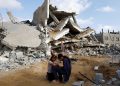
Others sleep under the open sky, their belongings piled in heaps beside the ruins of bombed-out buildings.
Children can be seen clutching small bags of clothes or plastic containers of water, while their parents search desperately for food and shade.
“There’s no water, no medicine, no clinics, nothing here for the children,” said Abu Ibrahim, a father of five who arrived from Gaza City two days ago.
“We escaped the bombing, but now we face hunger and thirst.” He added.
Aid groups say there is no functioning humanitarian infrastructure in central Gaza capable of meeting the demands of the displaced.
Wells and pipelines have been destroyed or contaminated, and no formal aid distribution centers exist in the area.
Makeshift community kitchens have sprung up, but food supplies are scarce, and long lines stretch into the heat of the day.
Healthcare is virtually non-existent. Doctors who fled northern hospitals have tried to set up field clinics, but they lack essential equipment and medicines.
Pregnant women, the elderly, and chronically ill patients are among the most at risk.
The searing late-September heat has compounded the suffering. With little shade and no proper shelter, heat exhaustion and dehydration are spreading rapidly, especially among children.
Despite the immense hardship, families say they have no choice but to endure. Returning north is impossible, and the south offers no relief.
Central Gaza, devastated and under-resourced, has become the reluctant refuge for tens of thousands of Palestinians uprooted by the Israeli offensive.
Shortlink for this post: https://daysofpalestine.ps/?p=67853