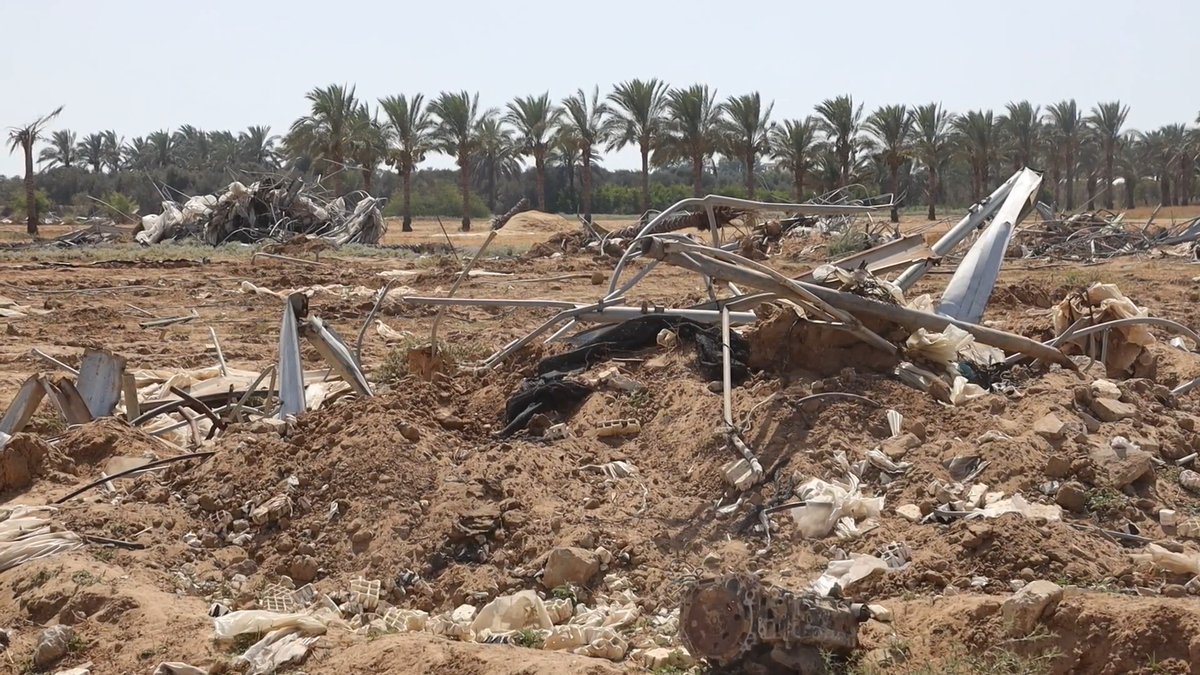
DayofPal — A new policy paper has revealed that more than 86% of agricultural land in the Gaza Strip has suffered varying degrees of damage during the 2023–2025 war, raising serious concerns about the future of food security and economic recovery in the territory.
The findings, published by the Palestinian Center for Political Studies, highlight the extensive destruction inflicted on Gaza’s agricultural sector.
The report, prepared by researcher Khaled Abu Amer, underscores that the damage extends beyond crops and infrastructure to include soil quality, water resources, and the broader ecological system, complicating recovery efforts.
According to the study, the devastation has led to the near-total collapse of water systems and significant losses in livestock, further deepening the crisis.
While some rehabilitation projects are currently underway with support from local and international actors, efforts remain limited to land preparation and have yet to restore full agricultural production.
This shortfall is largely attributed to a lack of essential inputs, energy, and funding.
The report also examines past reconstruction efforts in Gaza, noting a recurring pattern of “partial recovery” that fails to address underlying vulnerabilities.
Restrictions linked to the ongoing blockade, insufficient funding, and the absence of comprehensive environmental interventions have repeatedly hindered sustainable progress.
Researchers warn of a severe funding gap, with available resources covering less than 10% of urgent needs. The total cost of comprehensive reconstruction is estimated to exceed $4.2 billion, posing a significant challenge to rebuilding the agricultural sector and ensuring long-term food security.
The center is calling for a shift away from short-term emergency responses toward a comprehensive, sustainable development approach. Such a strategy, it argues, must address both political and environmental challenges to rebuild Gaza’s agricultural system and strengthen the resilience of its population.
The policy paper is part of a broader series aimed at providing in-depth analysis to support decision-makers and stakeholders involved in post-war recovery and reconstruction efforts.
Shortlink for this post: https://daysofpalestine.ps/?p=74341