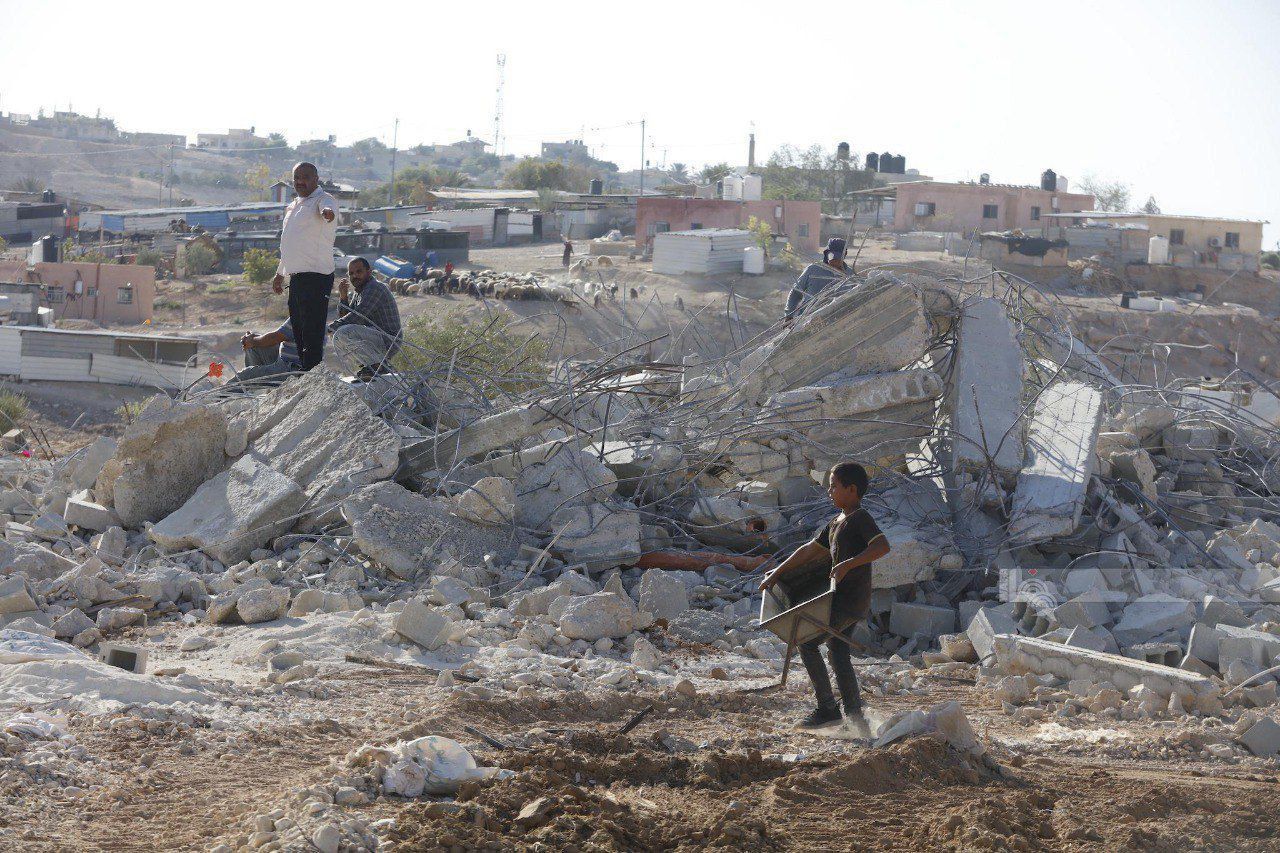
DaysofPal- Israel’s campaign against the Palestinian people has never been limited to Gaza. Nowhere is this more visible than in the devastated refugee camps of Jenin, Nur Shams, and Tulkarm, where entire communities have been emptied, homes reduced to rubble, and families severed from their land in what Palestinians describe as a warning against resistance and survival.
While global attention has largely centered on Gaza, Israel has continued advancing its long-standing settler-colonial project in the occupied West Bank. Settlement expansion, violent settler attacks carried out under military protection, land theft, the destruction of schools and homes, and forced displacement in areas such as Sheikh Jarrah and Silwan form part of a systematic effort to erase Palestinians from their homeland.
A recent visit to the northern West Bank revealed scenes strikingly similar to Gaza’s devastation. Bombed-out buildings, bulldozed streets, and emptied neighborhoods in refugee camps stand as a stark reminder that the assault targets Palestinians across all of historic Palestine.
Between January 21 and February 9, 2025, Israel carried out “Operation Iron Wall,” targeting the refugee camps of Jenin, Nur Shams, and Tulkarm under the pretext of combating “terrorism.” Nihad Shawish, head of the Nur Shams Public Committee, rejected this narrative. “As in Gaza, they claim the camps are centers of terrorism,” he said. “In reality, it is people seeking freedom. To Israel, all Palestinians are treated as targets.”
During the 19-day operation, heavily armed Israeli forces forcibly expelled around 40,000 refugees using armored vehicles, drones, and bulldozers. UNRWA described the assault as the largest displacement crisis in the West Bank since 1967, estimating that nearly half of Jenin camp, more than a third of Nur Shams, and significant parts of Tulkarm were destroyed or severely damaged.
In Nur Shams, narrow alleyways were razed and widened into military access routes. Entire neighborhoods were flattened, and every resident was expelled. The camp now stands as a ghost town.
Life Under Apartheid
Reaching these camps underscores the reality of Israeli apartheid. Palestinians endure long, punishing journeys through checkpoints, barricades, and segregated roads, while settlers travel freely on modern highways. What would take minutes on settler roads can take hours for Palestinians.
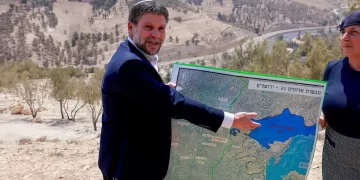
Villages like Sinjal are now encircled by razor wire, their entrances sealed without explanation. Meanwhile, settlements continue to expand at a rapid pace, emboldened by international impunity and a far-right Israeli government. Finance Minister Bezalel Smotrich has openly spoken of advancing “de facto sovereignty,” approving thousands of new settlement units designed to fragment Palestinian territory further.
Illegal outposts dot the hills, disfiguring ancient olive groves, while Palestinians are barred from roads and services reserved for settlers. These cumulative measures are designed to make daily life unbearable and push Palestinians off their land.
“Gaza in the West Bank”
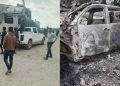
In Tulkarm, the ruins of Nur Shams stretch across the landscape. Entire sections of the camp have been bulldozed, homes destroyed to allow tanks to pass. Israeli military symbols are spray-painted on seized homes now used as army positions, while snipers reportedly fire unexpectedly.
Residents described how Israeli forces cut off electricity, water, and communications during the raids, forcing people to flee with nothing. Many sought shelter in mosques, schools, and wedding halls, now overcrowded and barely livable.
“It was like the Nakba all over again,” Shawish said. “We didn’t know where we were being sent.”
In unfinished school buildings, dozens of families share cramped rooms with minimal facilities. Toilets and showers are scarce. Food and work opportunities have vanished. UNRWA aid has been curtailed following Israeli restrictions, deepening the humanitarian crisis.
Silent Elimination
Local officials and displaced residents describe what is happening as a “silent elimination” modeled on Israel’s actions in Gaza. Homes are destroyed, rebuilding is forbidden, and residents are barred from returning. Even those allowed back are screened, with families of the killed, imprisoned, or politically active effectively excluded.
For young Palestinians like 17-year-old Ayhem, whose education ended when his home was demolished, the parallels with Gaza are unmistakable. “When I see Gaza on television, I see my life,” he said. “I’ve lost my home, my friends, everything.”
Despite the devastation, community volunteers continue working from damaged offices, supporting displaced families. Elderly residents like Fatma, whose home was partially demolished and looted by soldiers, say they are ready to “return to the rubble” if allowed. “Dignity is in the home,” she said. “Even if it’s destroyed.”
Erasing Refugeehood
All residents of these camps are refugees, descendants of those expelled during the 1948 Nakba and the 1967 war. Their refugee status is inextricably linked to the internationally recognized right of return, as enshrined in UN resolutions.
Palestinians fear that Israel’s destruction of refugee camps is aimed at eliminating not only communities, but the political meaning of refugeehood itself. “Refugees are the living witnesses of 1948,” one displaced man said. “Israel wants to erase the witnesses and erase the Palestinian cause.”
More than seven million Palestinian refugees live in exile worldwide. For Israel, their potential return is viewed as a demographic threat. By dismantling camps, targeting UNRWA, and dispersing communities, Palestinians say Israel is attempting to extinguish history, rights, and future claims to justice.
As Shawish put it: “They want to end refugee status by destroying the camps and the possibility of return. But for us, the camp is only a station. Our goal has always been to return to our original villages. This is our historic right, and we will never give it up.”
Shortlink for this post: https://daysofpalestine.ps/?p=71235