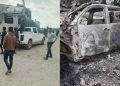
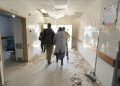
DaysofPal- One of the primary objectives of the ongoing Israeli war has been the destruction of the medical sector, which has included the bombing and storming of hospitals, as well as the destruction of medical equipment such as dialysis machines in major healthcare facilities.
This had a catastrophic impact on patients in general and kidney failure patients in particular.
Given that the need of kidney failure patients is a political need that cannot be dispensed with, these patients were subjected to terrible suffering in light of the destruction of dialysis departments in hospitals, especially in the northern Gaza Strip, as well as the dialysis department at Al-Shifa Hospital.
Given that kidney failure cannot be managed without regular dialysis, the destruction of medical facilities and dialysis equipment has led to the tragic deaths of many patients.
Without access to life-saving treatment, these individuals have died under extreme pain and suffering.
The ongoing war has not only devastated the healthcare system in Gaza but has also exacerbated the humanitarian disaster, particularly for those suffering from chronic conditions like kidney failure.
In the large room in the Dialysis Department at Shifa Medical Complex is crowded with patients suffering from kidney failure. Each one lies on his/her bed next to the dialysis machine, with a tube connected to one of their arms, undergoing a treatment session that lasts four continuous hours.
Wail Skik, who has been suffering from kidney failure for three years, says that his suffering has intensified since the outbreak of the Israeli genocidal war due to frequent interruptions in his dialysis sessions, which are a lifeline for him.
He adds, “I used to have dialysis three times a week, spending four hours in each session, but after the war broke out, the number of sessions decreased to twice a week, which doubles my suffering, in addition to the unavailability of medications and medical supplies, especially the fresh water needed for the machine.”
With the occupation forces invading the Shifa medical complex, Skik was displaced from his home in southwestern Gaza City to the Tel al-Hawa area, during which he went without dialysis for 29 continuous days, worsening his health condition. The journey to Shifa has become arduous due to the lack of transportation, forcing him to walk long distances, which increases his difficulties.
At many times, like other patients, he has to ride a cart pulled by an animal due to the unavailability of diesel needed to operate transport vehicles. He suffers from brittle bones and high blood pressure, which also adversely affects his already deteriorating health, compounded by a severe lack of healthy food.
Before the aggression, there were 1,100 kidney failure patients in the Gaza Strip, including 600 in Gaza and the northern governorates and 500 in the middle and southern regions. The suffering of these patients has doubled following the destruction of the Dialysis Department in Shifa Medical Complex by the occupation army during the military operation that began on March 18, which lasted for two weeks and rendered it completely out of service.
This was the second time that Israeli occupation forces stormed Shifa since the beginning of the genocidal war on October 7, 2023; they first invaded it on November 16, 2023, after besieging it for a week, during which its courtyards and large parts of its buildings, medical equipment, and electricity generator were destroyed.
Alongside Skik, the pain experienced by Hanadi Abdul Wahid was evident as she underwent dialysis. Hanadi, a young woman in her twenties who has been battling illness for eight years, states that she used to have dialysis three times a week. Still, the number has decreased to twice a week during the genocide due to a lack of machines, which negatively impacts her health.
She continues: “I cannot live without undergoing dialysis sessions weekly due to several symptoms, the most notable of which are difficulty breathing, fatigue, and loss of appetite,” noting that she went without dialysis for 21 continuous days during the occupation’s invasion of Shifa Medical Complex. “That period was the hardest days I have endured since the beginning of the war.”
Hanadi describes the difficulties imposed by the Israeli aggression on her and her fellow patients as “suffering on top of suffering.” In addition to the challenges of illness and its accompanying repercussions, there are difficulties in transportation from home to the hospital for dialysis. She indicates that she intended to have a kidney transplant at one of the hospitals in the enclave to resolve her health issue, but the war spoiled that plan.
Kidney failure patients in Gaza are calling for the opportunity to travel abroad for treatment to save their lives before it’s too late, or for an urgent cessation of the war and the reconstruction of the health sector so they can receive treatment.
For his part, Ghazi Al-Yazji, head of the nephrology department at Shifa Medical Complex, confirms that “the reality of the dialysis department in Shifa and the conditions of the patients receiving service there are extremely difficult. The department faces several obstacles, the most prominent of which is the increasing number of patients needing dialysis compared to the available machines.”
He explains that the number of patients suffering from kidney failure visiting the hospital these days is 68, each of whom needs two dialysis sessions weekly, “while we are suffering from a severe shortage of available machines in the department due to the burning of a large number of them during the last Israeli military operation in March.”
Al-Yazji notes that the department has 27 machines out of 70 before the war, and the current number does not match the number of patients needing sessions. Reducing the number of dialysis sessions leads to health complications for the patients, with the most significant complications being the accumulation of toxins, increased salt levels, and excess fluid around the heart and lungs.
He warns that, in addition to the shortage of machines, the dialysis department suffers from a lack of diesel necessary to operate generators, and the desalination plant needed for fresh water for the dialysis machines is out of order.
The dialysis department also faces a severe shortage of medications and medical supplies for kidney failure patients, notably a lack of temporary or permanent catheters, as well as a shortage of specialized medical staff, which adversely affects the department’s operations and the health system as a whole.
Al-Yazji said that several kidney patients have died due to the deterioration of their health conditions during the aggression. There are patients suffering from chronic kidney failure who need advanced machines and multiple sessions, but this is not available.
Shortlink for this post: https://daysofpalestine.ps/?p=59506