DaysofPal- New data from the ground in Gaza reveals a stark disconnect between the diplomatic promises of the October 2025 ceasefire and the lived reality of its 2.4 million residents. Seven months later, the humanitarian situation has not stabilized; it has deteriorated.
With vital services paralyzed by fuel shortages and aid deliveries falling 60% short of agreed-upon targets, the “truce” is increasingly viewed by analysts and locals alike as a “frozen crisis” rather than a path to peace.
On the ground, the humanitarian situation continues to decline at an alarming pace. Thousands of families remain displaced or without shelter, facing severe shortages in essential services. Overcrowded shelters have turned into environments lacking even the most basic standards of living, with the burden falling most heavily on vulnerable groups such as children and the elderly.
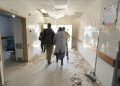
The healthcare sector is also under immense strain. Hospitals and medical centers are operating with extremely limited capacity amid critical shortages of medicines and supplies. With rising numbers of patients and injured individuals, the health system is increasingly at risk of collapse.
Risk of Paralysis in Vital Services
In this context, Gaza Civil Defense spokesperson Mahmoud Basal warned of a near-total halt in humanitarian and emergency services due to the continued ban on the entry of fuel, lubricants, and spare parts necessary to operate vehicles and equipment.
Basal said the crisis extends far beyond civil defense, affecting nearly all vital sectors, including hospitals that rely on generators during power outages. These generators themselves are now at risk of shutting down due to a lack of maintenance supplies and oil.
He added that shortages of spare parts have already forced many civil defense vehicles out of service, reducing operational capacity to roughly 10 percent. As a result, some areas are no longer covered by emergency services, leaving residents without adequate response in critical situations.
Continued Ceasefire Violations
At the same time, Gaza’s Government Media Office reported more than 2,400 violations of the ceasefire agreement over the past six months. These included gunfire, ground incursions, airstrikes, and demolitions within civilian areas.
According to the statement, at least 824 Palestinians have been killed in these incidents, including large numbers of children, women, and elderly people, while approximately 2,316 others have been injured. Civilians reportedly account for around 99 percent of the casualties.
The report also documented the arrest of 50 Palestinians during this period, most of them taken from residential neighborhoods rather than areas of active military presence, raising concerns about direct violations of the agreement.
Gap Between Commitments and Reality
Humanitarian data points to a significant gap between what was outlined in the ceasefire agreement and what has been implemented, particularly regarding the entry of aid and fuel.
Over six months, about 41,714 aid trucks entered Gaza, far short of the 110,400 trucks stipulated in the agreement. This amounts to an average of 227 trucks per day, compared to the agreed 600 daily trucks, in addition to 50 fuel trucks.
Specialists say these figures highlight a clear failure to meet commitments, as restrictions on the movement of goods and people continue. This has further worsened economic conditions, driving up unemployment and deepening poverty across the enclave.
In effect, the ceasefire appears less like a resolution and more like a “freezing” of the crisis. Humanitarian conditions continue to deteriorate in the absence of a clear political horizon or effective international action to enforce the agreement, particularly its humanitarian provisions.
Political analyst Hilal Nassar argued that the truce has failed to achieve its intended goals. Instead of ending the war and halting violence, it has been marked by repeated violations that have resulted in hundreds of additional deaths since the agreement was reached.
He noted that the ceasefire followed more than two years of devastating conflict that caused massive loss of life, widespread destruction of infrastructure, and deep economic and health crises. Although the agreement included phased steps, such as prisoner exchanges, partial troop withdrawals, and increased aid, these provisions have not been fully implemented on the ground.
According to Nassar, the ceasefire has not alleviated suffering but has instead compounded it, with continued attacks and shortages of essential supplies. He added that the lack of stability has worsened social conditions, increasing the number of orphans and widows and widening divisions within Gaza’s population.
A Pattern of Double Standards
Political writer and analyst Mohammed Shaheen described Israel’s failure to adhere to the ceasefire as part of a broader pattern of double standards shaping international responses to the Palestinian case.
He pointed out that since the ceasefire took effect on October 10, 2025, more than 2,400 violations have been recorded through mid-April 2026. These include direct fire at civilians, air raids, artillery shelling, ground incursions, and the destruction of homes and property.
Shaheen also referenced remarks by Volker Türk, who stated that Palestinians in Gaza remain unsafe months after the truce, given the continuation of daily attacks. Such conditions, he argued, are difficult to reconcile with the concept of a ceasefire.
He stressed that these actions should not be seen as isolated incidents but as systematic violations of international humanitarian law and the Geneva Conventions, which prohibit targeting civilians and obligate occupying powers to protect populations under their control.
Shaheen concluded that a fundamental question remains: whether a sustainable peace can be built on structural inequality and ongoing violence, or whether any real solution requires recognition of Palestinian self-determination and an end to policies that turn a ceasefire into a cover for continued control.
On the ground, the reality suggests that ongoing violations are prolonging the crisis, turning the ceasefire into a transitional phase that sustains the status quo rather than resolving it, in the absence of meaningful accountability.
Shortlink for this post: https://daysofpalestine.ps/?p=74318