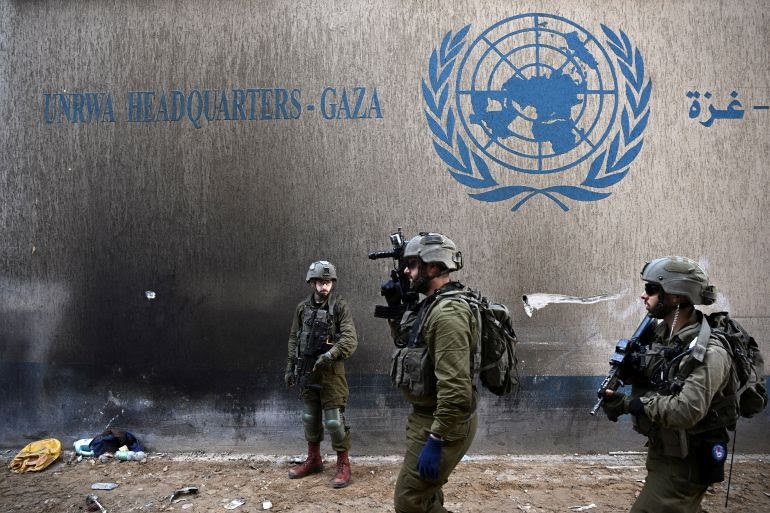
DaysofPal- The international community has strongly condemned Israel after its parliament passed two controversial laws designating the United Nations Relief and Works Agency for Palestine Refugees (UNRWA) as a “terror” group and barring its operations on “Israeli soil.”
If enforced, the new legislation would prevent UNRWA from delivering essential humanitarian support to Palestinians across the Israeli-occupied Gaza Strip and West Bank.
Established by the United Nations General Assembly in 1949, UNRWA was created to aid Palestinians who were displaced during the year of Nakba in 1948. Today, it serves as the primary provider of humanitarian services in Gaza and supports millions of Palestinian refugees across the occupied West Bank, Lebanon, Jordan, and Syria.
Israeli occupation’s recent action has drawn widespread rebuke from countries and international organizations, who say the ban could have catastrophic consequences.
Palestinian Response
The Palestinian leadership swiftly condemned the move. Nabil Abu Rudeineh, spokesperson for the Palestinian presidency in Ramallah, denounced the Israeli laws. “We will not allow this. The overwhelming vote of the Knesset reflects Israel’s transformation into a fascist state,” he said.
Hamas also criticized the legislation, calling it part of a “Zionist war and aggression against our people,” while the Palestinian Islamic Jihad (PIJ) described the ban as “an escalation in the genocide” against Palestinians.
United Nations
UN Secretary-General Antonio Guterres underscored the indispensable role of UNRWA, stating there is “no alternative” to the agency. He warned that the laws “could have devastating consequences for Palestine refugees in the Occupied Palestinian Territory, which is unacceptable,” and called on Israel to “act consistently with its obligations under the Charter of the United Nations and its other obligations under international law.”
Philippe Lazzarini, UNRWA’s Commissioner-General, condemned the legislation’s impact on Gaza, writing on social media, “These bills will only deepen the suffering of Palestinians, especially in #Gaza where people have been going through more than a year of sheer hell.”
Major Nations
China and Russia also expressed strong objections. Chinese UN envoy Fu Cong called Israel’s move “outrageous,” adding, “We are firmly opposed to this decision. UNRWA has played a key role in maintaining a lifeline for the Palestinian people in Gaza.”
Russia’s UN ambassador, Vasily Nebenzia, labeled the ban “terrible” and suggested it would worsen the situation in Gaza. He urged the United States to reinstate funding for UNRWA to show its commitment to the agency’s mission.
European Reaction
European leaders voiced similar concerns. British Prime Minister Keir Starmer criticized the laws, saying they “risk making UNRWA’s essential work for Palestinians impossible.”
He called the humanitarian situation in Gaza “simply unacceptable” and stressed the need for sufficient aid to reach civilians, adding, “Only UNRWA can deliver humanitarian aid at the scale and pace needed.”
Jordan’s Ministry of Foreign Affairs described the legislation as a “flagrant violation of international law and the obligations of Israel as the occupying power” and warned of “catastrophic consequences.”
Ireland, Norway, Slovenia, and Spain also issued a joint statement highlighting UNRWA’s mandate from the United Nations General Assembly and warning that the Israeli legislation sets a “very serious precedent” for the UN’s work and other multilateral organizations.
Australia, Belgium, and Switzerland
Australian Foreign Minister Penny Wong described UNRWA’s work as life-saving, voicing opposition to Israel’s decision to “severely restrict” the agency’s operations. She called on Israel to comply with the International Court of Justice’s binding orders to allow essential services and humanitarian assistance at scale in Gaza.
Belgium’s Foreign Minister Hadja Lahbib urged Israel to let UNRWA continue its UN mandate across the region. Lahbib highlighted that the agency provides “life-saving services in Gaza, the West Bank—including East Jerusalem—and across Lebanon, Syria, and Jordan.” She emphasized that “UNRWA is crucial to regional stability.”
The Swiss Ministry of Foreign Affairs expressed concern on social media about the “humanitarian, political, and legal implications” of Israel’s laws banning UNRWA’s operations.
WHO’s Position
World Health Organization (WHO) Director-General Tedros Adhanom Ghebreyesus also voiced his concerns, calling UNRWA an “irreplaceable lifeline” for Palestinians. “UNRWA was created by the UN member states. Today’s decision by the Israeli parliament barring UNRWA from its life-saving and health-protecting work on behalf of millions of Palestinians will have devastating consequences,” he said, adding that the move “contravenes Israel’s obligations and responsibilities, and threatens the lives and health of all those who depend on UNRWA.”
As the global community responds with near-unanimous criticism, the impact of Israel’s decision remains uncertain, though many nations and organizations fear it will exacerbate the ongoing humanitarian crisis in Gaza and further destabilize the region.
Shortlink for this post: https://daysofpalestine.ps/?p=58423