DaysofPal- Amid the groans of patients and the sputtering of worn-out medical machines, Gaza’s dialysis units have turned into stations of no return.
With Israel continuing to block the entry of essential medicines and supplies, hundreds of kidney patients are being pushed toward death.
Dozens of patients now find their names effectively added to “death lists”, not because of any fault of their own, but because their medication has been cut off, their dialysis machines have fallen silent, and the global conscience remains absent.
Kidney patients across the Gaza Strip are experiencing severe deterioration in their health due to a critical shortage of medicines, medical supplies, fuel required for dialysis sessions, and the widespread destruction of healthcare facilities under the ongoing Israeli genocidal war.
On one of the few functioning dialysis machines, Abdel Rahman Loz speaks through pain about how his health collapsed despite years of trying to avoid dialysis. High salinity in Gaza’s water, malnutrition, and reliance on canned food forced his condition to worsen.
Loz requires three dialysis sessions per week. Missing even one session leaves him unable to stand without support.
“Before the war, each dialysis session took four hours,” he told Safa. “But after Al-Kamal Adwan Hospital went out of service and dialysis for Gaza City and the north became limited to Al-Shifa Hospital only, we can no longer get the full sessions we need.”
“With patients from northern Gaza now added to the schedule, the hours and days of dialysis no longer provide what’s necessary. It’s become a matter of staying alive, not recovering.”
He adds that essential supplements, vitamins, blood fortifiers, and other medications, have disappeared entirely.
He added, “Our bodies are wasting away. Many patients are living on the edge of death.”
“People cannot imagine the suffering,” he says. “When sessions drop to only two per week, with less than three hours each, salts and toxins accumulate in the blood, shortening the patient’s lifespan.”
For patient Azeez Khodr, the ordeal is no different. His health continues to worsen due to the reduced number of dialysis sessions and the disappearance of essential medication.
“No one listens to our pain,” he tells Safa, struggling to hold back tears. “We are dying every moment, with no one to respond.”
Khodr explains that reduced treatment time has caused severe imbalances in patients’ bodies, with salts and toxins reaching dangerous levels in the bloodstream.
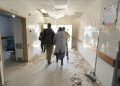
“The ward is overcrowded,” he says, noting that “Patients wait their turn for machines that barely function, but they remain our only lifeline against the toxins invading our bodies.”
Rami Al-Banna, a nurse in the dialysis unit, says power cuts and medical shortages have forced hospitals to cut dialysis sessions from three per week to just two, each lasting no more than two and a half hours.
“This leads to dangerous toxin buildup in patients’ bodies and rising death rates,” he warns.
Reaching hospitals has also become a major obstacle. With transportation scarce and costs soaring, many patients struggle just to arrive for treatment.
There is also a dire shortage of anemia-treating injections such as erythropoietin, forcing medical teams to rely on repeated blood transfusions, an inadequate and risky substitute.
Gaza currently has around 750 kidney failure patients, all dependent on dialysis. Al-Banna notes that Al-Shifa Hospital now operates 34 dialysis machines, which cannot meet the needs of the entire population following the collapse of other hospitals.
He warns that if the blockade on medical supplies continues, Gaza’s drug stocks and dialysis materials will soon run out entirely, placing hundreds of lives in immediate danger.
Shortlink for this post: https://daysofpalestine.ps/?p=69714