DaysofPal- The humanitarian crisis in the Gaza Strip has entered a dangerous new phase where the tools of survival are being dismantled by resource exhaustion. Strict Israeli controls on “dual-use” materials have created a severe scarcity of engine lubricants and mechanical parts, pushing the Civil Defense and ambulance services toward operational failure.
This mechanical decay represents a silent but deadly expansion of the crisis, threatening to leave the population without any means of emergency transport or rescue.
Improvising for Survival
At one ambulance center, paramedic Mahmoud Miqdad stands beside a disabled vehicle, silently inspecting its engine before removing parts from it. This has become a routine practice rather than an exception, carried out in an effort to keep other vehicles running.
“We have started taking parts from one vehicle to operate another,” Miqdad said. “Sometimes we transfer the remaining oil from one ambulance to another. We know these are temporary solutions, but they are the only options available.”
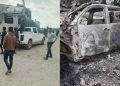
The crisis extends beyond a technical problem. It comes within the context of prolonged pressure on the health and emergency sectors. According to data from Gaza’s Government Media Office, 211 ambulances and 23 civil defense vehicles had been damaged by the end of 2025, further weakening an already fragile system.
With the arrival of April, dozens of vehicles were forced out of service due to the depletion of engine oils, hydraulic fluids, and filters, according to the Gaza Center for Human Rights. The center described current solutions as improvised and insufficient to ensure continued operations.
Under normal conditions, engine oil is replaced according to strict schedules. Miqdad explained that such standards no longer apply. “We use the oil far beyond its intended lifespan. The engine runs without proper protection, as if it is operating without blood,” he said.
He added that unusual engine noises, rising temperatures, and declining performance have become common, clear signs of internal wear that could lead to sudden breakdowns.
A Dual Threat
This silent deterioration creates a dual risk for emergency crews. Alongside the threat of direct targeting, there is now the possibility of vehicles breaking down during rescue missions.
“Imagine an ambulance stopping in the middle of the الطريق while transporting a wounded person. This has already happened to us more than once,” Miqdad said. “In our work, every minute can mean life or death. Any delay is not just a number but the potential loss of a life.”
Abdel Majeed Al-Attar, director of ambulance services in the central region at the Ministry of Health, confirmed a sharp decline in operational readiness. He said the number of functioning ambulances has dropped from ten to just three, a level far below minimum needs.
“We are forced to limit vehicle movement to avoid breakdowns, which has increased response times from half an hour to as much as two hours,” Al-Attar explained. “We prioritize a small number of vehicles, while others remain out of service due to worn-out engines.”
Warnings of a “Double Catastrophe”
The crisis is not limited to ambulances. Hospitals are also affected, relying heavily on generators that operate for long hours each day. These generators require regular maintenance, oil, and filters, all of which are now in short supply.
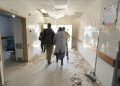
In this context, the Gaza Center for Human Rights reported that one of the main generators at Nasser Medical Complex had stopped working, forcing reliance on smaller generators operating for limited hours. This situation threatens critical departments such as intensive care units and operating rooms.
Ismail Al-Thawabta, Director General of the Government Media Office, warned that the health sector and ambulance services are facing a serious challenge due to the acute shortage of oils, filters, and essential operating materials.
He stated that the continuation of these shortages, combined with the absence of regular supplies, places healthcare institutions at risk of partial or total shutdown. This comes at a time when the strip is under unprecedented pressure due to the rising number of wounded and critical cases.
Al-Thawabta emphasized that ambulances, generators, and medical equipment depend fundamentally on the availability of oils to function efficiently, warning that any disruption could lead to catastrophic consequences for tens of thousands of patients.
He noted that authorities have issued repeated warnings about the severity of the crisis and called for urgent intervention to ensure the steady entry of oils and essential supplies. He also placed responsibility on Israel and relevant parties for the deterioration of conditions, stressing the need to protect the health sector and emergency services from restrictions, given their purely humanitarian role.
He concluded that without immediate and effective solutions, the situation risks escalating into a compounded humanitarian disaster, placing the lives of thousands of patients and injured individuals in immediate danger.
Shortlink for this post: https://daysofpalestine.ps/?p=74282