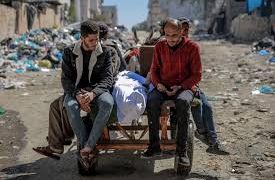

DaysofPal-The humanitarian catastrophe unfolding in the Gaza Strip has been described as the “most dangerous” in decades by Mohammed Eid Amjad Shawa, director of the Palestinian Non-Governmental Organizations Network.
Speaking to Palestine Online, Shawa attributed the unprecedented scale of suffering to the failure of the international community to uphold its moral and legal obligations amid the ongoing Israeli genocide, which has now entered its 19th month.
Gaza, home to approximately 2.4 million civilians, has been under a relentless land, sea, and air blockade imposed by Israeli occupation since October 2023.
The siege has led to widespread hunger, disease, forced displacement, and unrelenting bombing campaigns. Shawa warned of an impending disaster, with chronic illness, malnutrition, and lack of essential resources threatening mass deaths among vulnerable populations, including children, pregnant women, and those suffering from diseases like cancer, diabetes, and thalassemia.
Starvation and Disease: A Man-Made Famine
Since the start of the Israeli genocidal war on Gaza, at least 52 people—50 of them children—have died from severe hunger, according to Doctors Without Borders. Over 60,000 children in the Strip are now suffering from acute malnutrition, underscoring the gravity of the crisis.
Israeli Prime Minister Benjamin Netanyahu’s directive to seal all crossings into Gaza since March 2 has exacerbated the situation, reversing the terms of a fragile ceasefire agreement brokered by Egypt, Qatar, and the United States in January 2024.
The blockade has left food stocks depleted, with UN agencies reporting that their supplies have run out. Charity kitchens, which have provided one meal a day to desperate families, are on the verge of shutting down.
Meanwhile, water scarcity has reached alarming levels, with per capita access to clean water dropping to less than five liters per day—a fraction of the minimum required for survival.
Healthcare Collapse and Environmental Catastrophe
The healthcare system in Gaza is on the brink of total collapse. Thirty-six hospitals and health facilities have been rendered inoperable due to Israeli airstrikes, fuel shortages, and the killing or arrest of medical personnel. The World Health Organization (WHO) described the healthcare crisis as “beyond description,” with patients dying from treatable conditions and surgeries postponed indefinitely.
The environmental situation is equally dire. Over 270,000 tons of solid waste have accumulated across the Strip, creating a public health emergency. Israeli restrictions have prevented municipalities from operating waste management machinery, leading to open sewage and contaminated neighborhoods.
Cleaning supplies are nearly nonexistent in local markets, raising fears of a resurgence of epidemics such as cholera and polio. Alarmingly, the Israeli ban on polio vaccines for nearly two months has left 600,000 children at risk of paralysis and lifelong disabilities.
International Community’s Failure
Shawa condemned the international community for its failure to enforce international law and hold Israeli occupation accountable for using starvation and thirst as weapons of war, a violation classified as a “war crime” under international humanitarian law.
Last week, Human Rights Watch accused the Israeli occupation of deliberately starving Gaza’s population and called for targeted sanctions and an arms embargo against the Netanyahu government.
The International Court of Justice (ICJ) recently ruled in favor of South Africa’s case accusing the Israeli occupation of genocide, yet enforcement remains elusive.
The Commissioner-General of the United Nations Relief and Works Agency for Palestine Refugees (UNRWA) has condemned the Israeli occupation’s continued obstruction of aid deliveries, calling it a “politically motivated, man-made famine.”
A Call for Accountability
As the war entered its second year, activists and human rights organizations urged global leaders to intervene. Shawa emphasized the urgent need for accountability, urging the international community to enforce international law and ensure Gazans receive humanitarian aid and basic services.
He warned that without immediate action, the consequences will be catastrophic—not only for Gaza but also for global peace and stability.
In the face of what many describe as a systematic effort to destroy every aspect of life in Gaza, the question remains: Will the world act before it’s too late?
Shortlink for this post: https://daysofpalestine.ps/?p=62508