The Columbia Law Review’s board of directors has taken the drastic step of shutting down the publication’s website after student editors defied pressure to censor an article accusing Israel of genocide and apartheid.
Student editors reported that they faced significant pressure from the journal’s board to halt the publication of an academic piece written by Palestinian human rights lawyer Rabea Eghbariah. The article, titled “Nakba as a Legal Concept,” argues that Israel has committed “crimes against humanity” in Gaza and maintains an apartheid regime.
After the editors refused to comply and published the article on Monday morning, the board — comprising faculty and alumni from Columbia University’s law school — shut down the law review’s website. As of Tuesday evening, the site remained offline with a notice stating it was “under maintenance.”
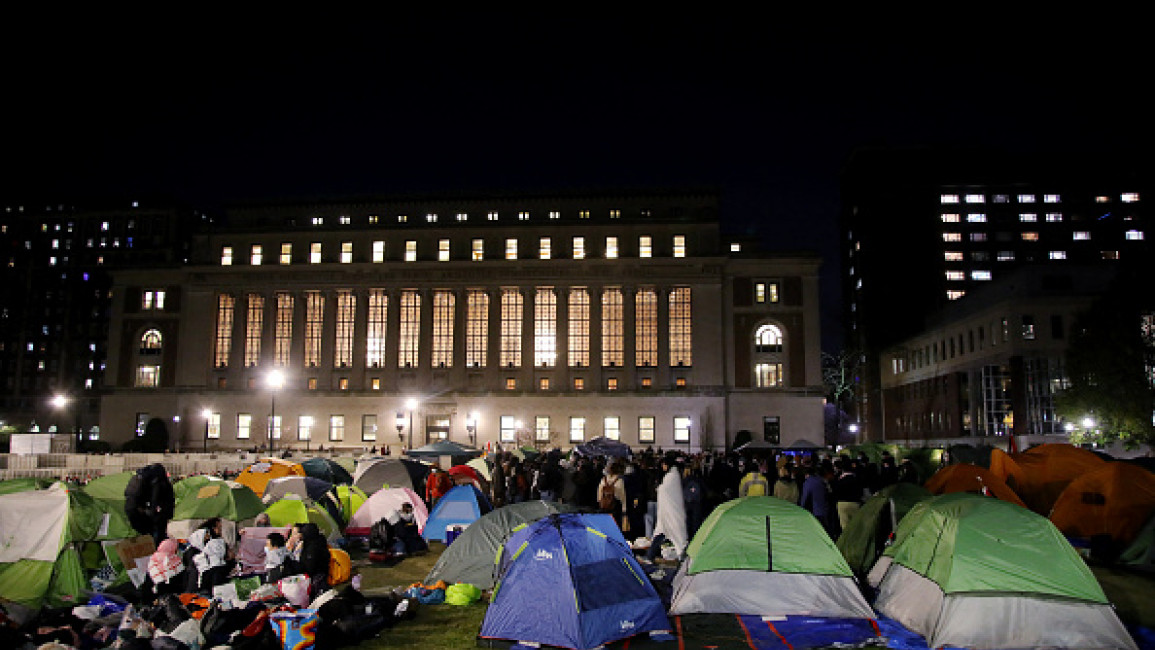
This incident highlights a significant controversy over academic freedom that has divided students, staff, and administrators at Columbia University since the start of Israel’s war on Gaza. Columbia University is known for its pro-Palestinian protests and sit-ins during this conflict.
Several editors at the Columbia Law Review condemned the board’s actions as an unprecedented violation of the journal’s editorial independence. Historically, the board has overseen the publication’s finances but has not interfered in the selection of articles.
In a letter sent to student editors on Tuesday, which was shared with The Associated Press, the board expressed concern that the article had bypassed the usual review processes. “In order to preserve the status quo and provide student editors some window of opportunity to review the piece, as well as provide time for the Law Review to determine how to proceed, we temporarily suspended the website,” the letter stated.
Editors involved in the publication of Eghbariah’s article maintained that they adhered to a rigorous review process, although they acknowledged that they had limited the number of students aware of the article to mitigate expected backlash.
Eghbariah, a Harvard doctoral candidate, commented via text message that the website’s suspension represents “a microcosm of a broader authoritarian repression taking place across U.S. campuses.”
The decision to publish a piece on Palestinian legal issues was overwhelmingly supported by the student editors in December. A smaller committee, open to all of the publication’s editorial leadership, ultimately accepted Eghbariah’s article. It was noted that an earlier version of the article had been submitted to the Harvard Law Review but was not published due to internal backlash, according to a report in The Intercept.
Shortlink for this post: https://daysofpalestine.ps/?p=54338