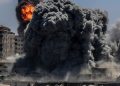
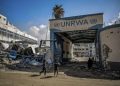
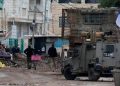
DaysofPal- A British writer and journalist has argued that the ongoing Israeli genocidal war in Gaza since October 2023 is not an isolated event or a temporary response but rather part of a long-standing Israeli policy aimed at displacing Palestinians and asserting control over their land.
In an analytical report, the writer said that the genocide of Gaza has been on the table for decades, and he also stated that current developments in Gaza cannot be separated from earlier historical events, particularly the 1948 Arab-Israeli War and the 1967 War, suggesting that these milestones form part of a continuous trajectory shaping present-day realities.
The argument draws on testimonies from Israeli soldiers involved in the 1967 war, recently published in the Israeli newspaper Haaretz.
According to these accounts, soldiers described receiving orders to target Palestinian civilians and instill fear among the population, confessions the writer says highlight patterns that persist in current military practices.
The report suggests that the 1967 war provided an opportunity for Israeli occupation to expand its settlement project following the 1948 war, with some Israeli leaders viewing Gaza as a territory to be depopulated.
The writer cites statements attributed to former Israeli Prime Minister Levi Eshkol regarding policies intended to pressure Palestinians to leave by restricting access to essential resources, including water.
The analysis also links current conditions in Gaza, such as blockade measures and humanitarian hardship, to earlier strategies aimed at exerting pressure on Palestinian residents.
The writer argues that the events following the October 7, 2023 attack created an opportunity for the Israeli government, led by Prime Minister Benjamin Netanyahu, to implement these policies on a broader and more destructive scale.
The report further discusses mass displacement following the 1967 war, referencing estimates that hundreds of thousands of Palestinians were forced to leave their homes across the West Bank, Gaza, and other areas.
It also includes accounts of Palestinians being shot while attempting to return, drawing parallels with present-day restrictions on movement and return in Gaza.
A significant portion of the article focuses on civilian casualties, particularly children, arguing that harm to civilians is either deliberate or insufficiently addressed, reflecting a military culture that dehumanizes Palestinians.
The writer also refers to reports of famine, blockade, destruction of infrastructure, and mass graves and war crimes in Gaza.
Central to the analysis is criticism of Western political and media narratives, which the writer claims often isolate recent events from their broader historical context, focusing primarily on the October 7 attack while overlooking decades of occupation, displacement, and violence.
According to the report, this framing contributes to justifying current Israeli policies as acts of self-defense, without adequately examining their historical roots.
The writer concludes that understanding the situation in Gaza requires examining the full historical context dating back to 1948 and 1967, arguing that the current war represents, in this view, the latest phase of a long-term project to reshape the demographic and political landscape in Palestine.
The article also criticizes Western governments and major media outlets, accusing them of silence or complicity regarding the ongoing displacement policies, and stressing that ignoring the historical dimension leads to an incomplete and distorted understanding of the conflict.
Shortlink for this post: https://daysofpalestine.ps/?p=75359