DayofPal– In the summer of 2024, Nizam Mamode, a retired professor of transplant surgery and a volunteer with Medical Aid for Palestinians (MAP), found himself in a Gaza operating room—a far cry from his career in London.
Mamode, who spent years working in a prestigious London hospital, never imagined that he would one day be performing surgery in a war-torn environment. Yet, last August, he faced a shocking incident in Gaza while operating on an eight-year-old girl who was bleeding to death at Nasser Hospital in Khan Younis.
The horror intensified when the nurse informed him that they had run out of gauze swabs. With no other options, Mamode had to scoop the blood with his hands. He was deeply concerned that the child wouldn’t survive, but in a rare piece of good news, she did. Sadly, many others did not.
Having retired from the NHS, Mamode made the decision to volunteer in Gaza, aware that the region’s hospitals were in desperate need of skilled surgeons. Life as a transplant surgeon in London had been tough but rewarding, offering a certain prestige. His work in Gaza, however, was an entirely different experience, one that no amount of preparation could have readied him for.
From the moment Mamode entered Gaza, the dangers were clear. Led by a large Swedish man in a floral shirt, the convoy of armoured UN Land Cruisers was warned to “try not to get killed.”
Two weeks later, the same convoy was fired upon by the Israeli army. Gaza, Mamode discovered, is one of the most dangerous places in the world for medical workers, with over 1,300 healthcare professionals and aid workers killed since the start of the war.
The destruction was impossible to ignore. As he travelled across southern Gaza, the landscape resembled that of post-Hiroshima, with buildings flattened for miles around. People were largely absent due to the war, but some appeared to be looters covered by Israelo occupation.
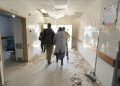
The chaos only worsened upon arriving at Nasser Hospital, where Mamode described conditions as “medieval.” Wards overflowed with patients lying on the floor, surrounded by relatives who had come to help nurses care for the sick. Hygiene was non-existent, and medical supplies were scarce. At times, essential items like soap, sterile gloves, and surgical gowns were either unavailable or severely restricted.
The hospital endured constant bombings. Like most others in the Strip, Nasser Hospital had already been hit with both patients and staff killed.
Mamode and his colleagues faced mass casualty every day. Emergency rooms became battlegrounds of blood and broken bodies, with limbs missing and children screaming in pain. Some days, Mamode would operate for more than 24 hours straight, fully aware that the bombing could soon target them.
What haunts Mamode most, however, are the images of injured children, particularly those with head wounds caused by sniper fire—clear evidence of the deliberate targeting of civilians.
“The deliberate targeting of children was a common sight,” he said. “I operated on a seven-year-old boy, Amer, who had been shot by a drone that targets civilians fleeing the bombing. He had part of his stomach protruding through his chest. I was relieved to see him survive, but we saw children like him every day, and most weren’t so lucky.”
Mamode, alongside 30 other UK doctors, penned a letter to Labour Party leader Keir Starmer in August, urging the British government to condemn Israel’s atrocities in Gaza. The targeting of children, they stated, was undeniable.
Meanwhile, 99 US healthcare workers sent a similar plea to President Joe Biden in October. Many Palestinians now view these atrocities as part of an ongoing genocide—a sentiment echoed by organizations like Amnesty International and UN human rights experts.
In his time in Gaza, Mamode had worked in several conflict zones, but none compared to the scale of devastation he witnessed in Gaza. The destruction was not just physical, but also social.
“This war was qualitatively different from anything I’ve seen in the last two decades,” he said.
Even if a ceasefire holds, Mamode believes it will take years to rebuild Gaza physically and socially. His hope is that children like Amer will have a chance at a better, more humane future. But, as Mamode reflects on his time in Gaza, the guilt of returning to a life of comfort while millions in Gaza endure hardship is overwhelming.
“The UK government, the Labour government I campaigned for, continues to supply arms to Israel while refusing to condemn its actions,” Mamode said.
“I feel ashamed that political power, which may involve compromises, has crossed moral red lines in Gaza. The genocide happening there is the ultimate test of the moral courage of our leaders, and so far, they’ve failed.”
As the bombs may have stopped for now, the need for accountability remains.
“The bombing may have stopped, but the necessity to hold those responsible for these crimes to account is just as urgent,” Mamode concluded.
Shortlink for this post: https://daysofpalestine.ps/?p=60348