DaysofPal- As the Israeli genocidal war in Gaza surpasses 1,000 days, patients in need of rehabilitation care are facing mounting challenges, with much of the territory’s medical infrastructure severely damaged and unable to meet growing demand.
For 71-year-old Khaled Ghabn, the crisis is deeply personal. After suffering a sudden stroke that left him partially paralyzed and struggling to speak and swallow, his recovery now depends on access to physical therapy, which has become increasingly scarce.
“My father was active and full of life,” said his son, Amer Ghabn.
“Now we are just hoping he can get the rehabilitation sessions that might help him regain some of his health.” He added.
But that hope has been difficult to realize. The family waited two weeks for Ghabn to be admitted to Al-Wafa Hospital for Medical Rehabilitation and Specialized Surgery, one of the few facilities still offering such services.
Even then, limited bed capacity and long waiting lists meant further delays.
“Every day we wait is a day lost from his recovery,” his son said.
“It is painful to watch him deteriorate while we can do nothing.” He added.
Ghabn’s case reflects a broader crisis affecting thousands across Gaza, where access to basic healthcare, especially rehabilitation, has become increasingly limited.
Strokes are now reported as the third leading cause of death in the territory, with approximately 2,000 cases annually.
Healthcare officials say the territory’s rehabilitation system, already under strain before the war, has been pushed to the brink.
Al-Wafa Hospital itself has sustained heavy damage and now operates from a temporary location in central Gaza, significantly reducing its capacity.
Estimates indicate that only about 42 percent of healthcare facilities in Gaza remain operational, most providing partial services.
While some rehabilitation centers have partially reopened, their capacity falls far short of the growing need.
The World Health Organization estimates that tens of thousands of people in Gaza have sustained life-altering injuries since October 2023, many requiring long-term rehabilitation care.
With hospitals overwhelmed, some patients are seeking alternatives. Sixty-eight-year-old Thanaa Mhanna opted to receive physical therapy at home after struggling to access treatment in overcrowded facilities.
“I saw the long lines and hours of waiting,” she said.
“I had no choice but to bring a therapist home, even though it is very expensive.” She added.
Doctors warned her that delaying treatment could lead to permanent damage. “Early and continuous therapy is essential,” she said.
“But how can elderly patients endure the hardship of traveling and waiting under these conditions?” she continued.
Health officials also report severe shortages of essential medicines and supplies due to the Israeli suffocating siege.
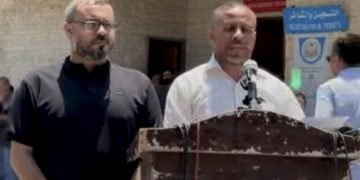
According to Zaher Al-Wahidi, director of the Health Information Unit at Gaza’s Health Ministry, more than half of essential medications and nearly 60 percent of medical supplies are depleted.
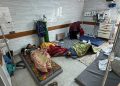
Hospitals are operating far beyond capacity, with bed occupancy exceeding 300 percent in some facilities, forcing patients into field hospitals and tents.
More than 20,000 patients are currently waiting for treatment or referrals abroad.
Al-Wahidi added that between 94 and 95 percent of Gaza’s healthcare infrastructure has been damaged or rendered inoperable, leaving the remaining facilities struggling with shortages of staff, medicine, and equipment.
He warned that the humanitarian and health crisis is likely to worsen, noting that more than 19,000 injured individuals urgently need long-term rehabilitation, while the territory’s ability to provide such care is now “almost nonexistent.”
As the Israeli genocide continues, patients like Khaled Ghabn remain caught in a system under extreme strain, where access to recovery is increasingly uncertain.
Shortlink for this post: https://daysofpalestine.ps/?p=76055