
DaysofPal- The suffering of residents in the Gaza Strip is worsening at an unprecedented pace as the scorching summer sets in and temperatures soar to extreme levels, as Israeli genocide has destroyed most of the water wells in Gaza.
People are now facing a new and harsh chapter of daily hardship, driven by the widespread and systematic destruction of water infrastructure during the latest military escalation.
At the heart of this crisis, a drop of water has shifted from being a basic human right to an almost unattainable dream.
It has become a scarce commodity that demands immense physical effort and comes at a high cost to people’s health.
Across the territory, long queues stretch for hours in front of water trucks and limited filling points, while warnings grow of an impending public health disaster threatening hundreds of thousands of displaced people, especially children, the elderly, and the sick living in overcrowded camps.
According to international organizations, the crisis is becoming increasingly severe. Tens of thousands of families now rely entirely on water tankers or poorly equipped local stations. UNICEF reports that 82 percent of households in Gaza are experiencing water insecurity, while 70 percent cannot access even the minimum humanitarian requirement for survival, estimated at six liters per person per day.
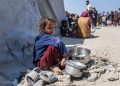
Personal stories reflect the depth of this daily struggle. A displaced mother of three in a camp west of Gaza City describes standing for more than two hours under the blazing sun waiting for a water truck.
When it finally arrives, chaos erupts as people rush in fear that supplies will run out. The crisis, she explains, goes beyond thirst; it now affects basic hygiene, including washing clothes and bathing.
In the Beach Camp, securing water has become a daily routine that robs children of their childhood.
One father wakes at dawn to prepare empty containers and takes his children on long walks to collect enough water for just one day for his family of six.
He has noticed a sharp decline in the number of trucks reaching their area.
In Deir al-Balah, conditions are equally dire. A mother and her family are living under severe water scarcity due to the complete absence of tanker deliveries. Attempts to ration water have failed under the intense summer heat and the needs of her children. She fears dehydration or being forced to use contaminated water.
Her 13-year-old son describes walking long distances carrying heavy containers, wishing only to return to a normal life where he does not have to worry about finding clean water.
For others, the burden becomes life-threatening. A man caring for his elderly parents explains that available water is often salty or polluted, posing serious risks to his father, who suffers from chronic illness. With no income, he is forced to ration food in order to buy expensive bottled water.
The crisis is further compounded by a sharp decline in international funding for drinking water support, according to a source within a humanitarian organization operating in Gaza. This reduction is expected to have catastrophic consequences in the coming weeks.
Officials warn that the situation poses a direct threat to public health and increases the likelihood of deadly disease outbreaks. Around 85 percent of water and sanitation facilities, including wells, pumping stations, desalination plants, and treatment systems, have been damaged or destroyed.
Losses in this sector are estimated at approximately $800 million.
As a result, water production has dropped to about 130,000 cubic meters per day, only 30 to 40 percent of pre-war levels, which once reached around 300,000 cubic meters daily.
Damage to distribution networks has also increased water loss from 30 percent before the war to as much as 50–60 percent today.
In displacement camps relying on tanker deliveries, individuals now receive no more than 10 liters of water per day, far below the World Health Organization’s recommended minimum of 100 liters.
The situation is made worse by contamination risks during transport and storage in camps. Even before the Israeli genocide, 97 percent of groundwater in Gaza was already considered unsafe for drinking.
Now, the mixing of wastewater with accumulated garbage raises the risk of widespread outbreaks of waterborne and skin diseases.
With summer intensifying demand, municipalities face severe challenges, including fuel shortages, lack of spare parts, and insufficient chlorine needed to operate and disinfect water systems.
The ongoing Israeli blockade continues to obstruct any meaningful efforts to restore production or improve life-saving services.
Under these conditions, Gaza’s water crisis is no longer just a service failure, it has become a silent threat to life itself.
The risk of epidemics looms large, placing the international community and humanitarian organizations before a critical moral test: to act urgently, facilitate the entry of essential supplies, and help restore what remains of the water system before thirst and disease claim even more lives.
Shortlink for this post: https://daysofpalestine.ps/?p=75456