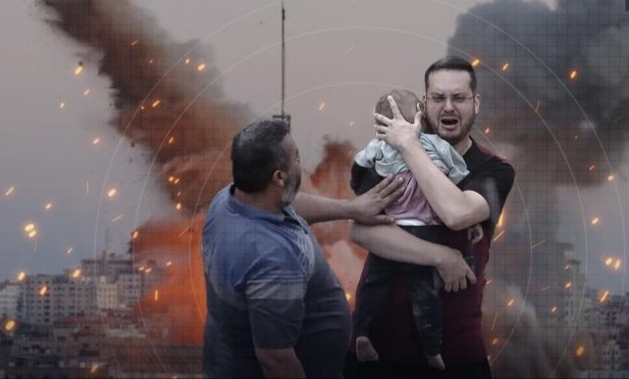
In Gaza, where each heartbeat carries a prayer for survival, parents cling desperately to any hope of safeguarding their children. For the al-Waseifi family, this hope arrived in the form of polio vaccinations.
Yet, in a place where death can come from the sky without warning, even a dose of life-saving medicine couldn’t protect their children from the grim fate imposed by relentless airstrikes.
Last month, the al-Waseifi children, along with their cousins, received the first dose of the polio vaccine, an effort led by global health organizations to prevent an outbreak of a disease long eradicated elsewhere.
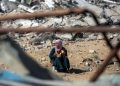
But just days later, on September 24th, an Israeli airstrike shattered their home in the Nuseirat refugee camp. The children, who had just been shielded from the ravages of polio, fell victim to the violence surrounding them, leaving no one to receive the scheduled second dose.
The father of the children, Osama al-Waseifi, recalls that last conversation with his daughter Salam before the explosion silenced her forever. “Just moments before the strike, Salam tugged at me, asking, ‘Dad, hurry, finish cutting my hair. I’m in a rush!’ In an instant, everything ended.
She was gone with her siblings—Sulf, Suwar, and Sa’id—as well as their cousins and aunt. Eight children, silenced in a single heartbeat. The sounds of their laughter, their cries, their fears… all extinguished.”
As he continued, Osama struggled to speak, his voice thick with grief. “Yesterday, a team came to our door with the polio vaccine, ready to give the children their second dose. But they found no children left to vaccinate.”
His pain was mirrored across Gaza, where parents are haunted by the question: how can they keep their children safe from illness when they cannot protect them from bombs?
On September 12th, the first phase of Gaza’s polio vaccination campaign ended. Over 560,000 children were vaccinated, thanks to a push by the World Health Organization (WHO).
Yet, for the al-Waseifi family, the future doses would be meaningless. They had offered their children as martyrs, sixteen in total, including Osama’s children, his nieces, and nephews.
“We don’t need medicine or aid; we need safety and stability,” he said. “Our children face terror every day, lying awake to the sound of planes, trembling at the thought that the next bomb will take them.”
This devastation comes amid an outbreak of polio—the first case seen in Gaza in 25 years, a diagnosis delivered just this August when a baby was confirmed partially paralyzed by the virus.
Children under five are particularly vulnerable, and health organizations, despite the blockades and restrictions, rallied to prevent its spread. But Osama, and many parents like him, feel that these vaccinations are merely treating the symptoms of a deeper, more unrelenting disease: the ongoing siege and daily bombardment that deny their children even a chance at peace.
The blockade has worsened living conditions, as essential supplies—like vaccines and medical equipment—are withheld. Moreover, the restrictions have prevented vital wastewater treatments, worsening health risks and even facilitating the spread of diseases like polio.
Gaza’s Ministry of Health has accused Israeli policies of directly exacerbating the outbreak, barring children from four routine vaccines.
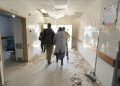
On October 14th, tragedy struck even within a UNRWA shelter in Nuseirat, where families had taken refuge and where polio vaccinations were being administered. An Israeli airstrike hit the site, illustrating the sobering truth that even temporary sanctuaries in Gaza are not immune from destruction.
With the war on Gaza now stretching into its 387th day, the human toll continues to grow, marked by devastating losses. More than 42,924 lives have been claimed, and over 100,833 people injured, the vast majority of them women and children.
Shortlink for this post: https://daysofpalestine.ps/?p=58369