DaysofPal – After days of complex field operations, Hamas has handed over the bodies of three Israeli captives to the International Committee of the Red Cross (ICRC). The recovery mission took place in areas beyond the so-called Yellow Line, zones under Israeli military control, requiring delicate coordination between Hamas fighters and ICRC teams, assisted by heavy machinery to dig through vast layers of rubble.
The bodies were discovered inside a tunnel in the southern Gaza Strip, according to Hamas’s armed wing, the Izz ad-Din al-Qassam Brigades. The remains were later transferred by the Israeli army to the Institute of Forensic Medicine for identification, according to the Israeli Ministry of Health.
The Israeli government confirmed on Sunday evening that it had received three coffins containing the remains of prisoners of war recovered from sites in Khan Younis and the Shujayea neighborhood east of Gaza City, two of the areas most devastated by months of bombardment.
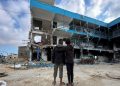
The searches in these regions remain perilous. Despite the ongoing ceasefire, Israeli forces continue to demolish homes and buildings, complicating recovery efforts. The areas of Bani Suheila and Shujayea, where the latest bodies were found, have been particularly affected by the destruction.
According to several experts and U.S. officials, the retrieval of the remaining eight Israeli captives believed to be in Gaza will be even more difficult. With hundreds of tons of debris still covering much of the Strip, it is unclear whether all the bodies can be located.
Hamas has stated that the process “will take time due to the extensive destruction caused by the war.” Since the ceasefire took effect last October, the group has handed over 20 living Israeli prisoners and the remains of 19 others.
According to the government media office in Gaza, some 9,500 Palestinians are still missing under the rubble of destruction left by the two-year Israeli war that killed more than 68,000 people, mostly women and children; injured about 170,000 others; and destroyed more than 90% of the civilian infrastructure in the sector.
Shortlink for this post: https://daysofpalestine.ps/?p=69015